
(Last Update: 11/27/2025)
Donating a used mattress is one of the most impactful ways to help families in need while reducing landfill waste. Millions of mattresses are discarded every year, yet many are still clean, usable, and perfectly capable of giving someone a better night’s sleep.
Whether you’re upgrading to a new bed, moving, or clearing out a guest room, mattress donation is the most eco-friendly and community-supportive option available.
This guide walks you step-by-step through eligibility, preparation, pickup options, recycling alternatives, tax rules, and more—so you know exactly what to do from start to finish.
What Makes a Mattress Eligible for Donation?
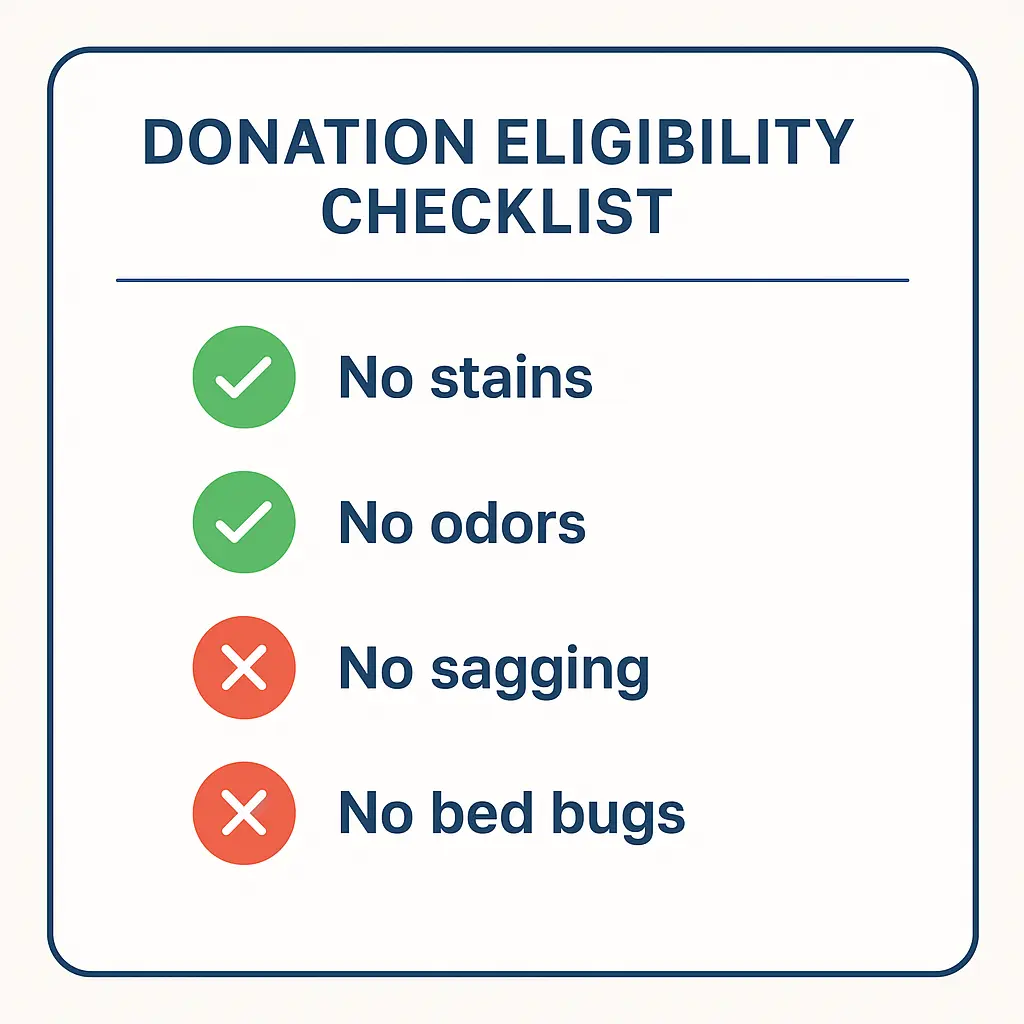
Before you call a charity or schedule a pickup, make sure your mattress meets basic donation standards. Almost every reputable organization follows similar guidelines, and understanding these rules early saves time and prevents wasted trips.
A donatable mattress must be structurally sound and sanitary. That means:
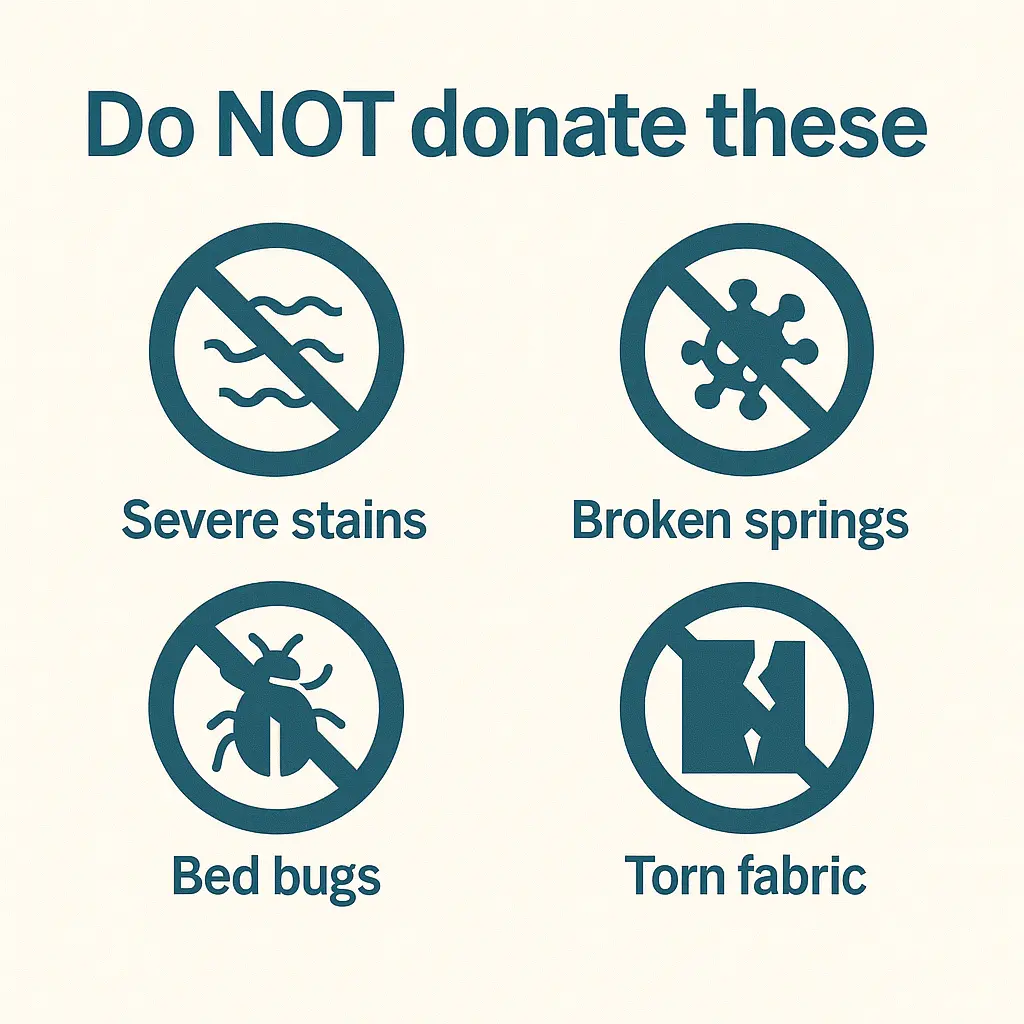
- No visible stains or discoloration
- No strong odors (smoke, pets, mildew, or chemicals)
- No rips, holes, or frayed fabric
- No sagging or broken springs
- No bed bugs or signs of infestation
home goods
If your mattress comes with a box spring, it must be in usable condition—no bent frames, no protruding metal, and no sagging.
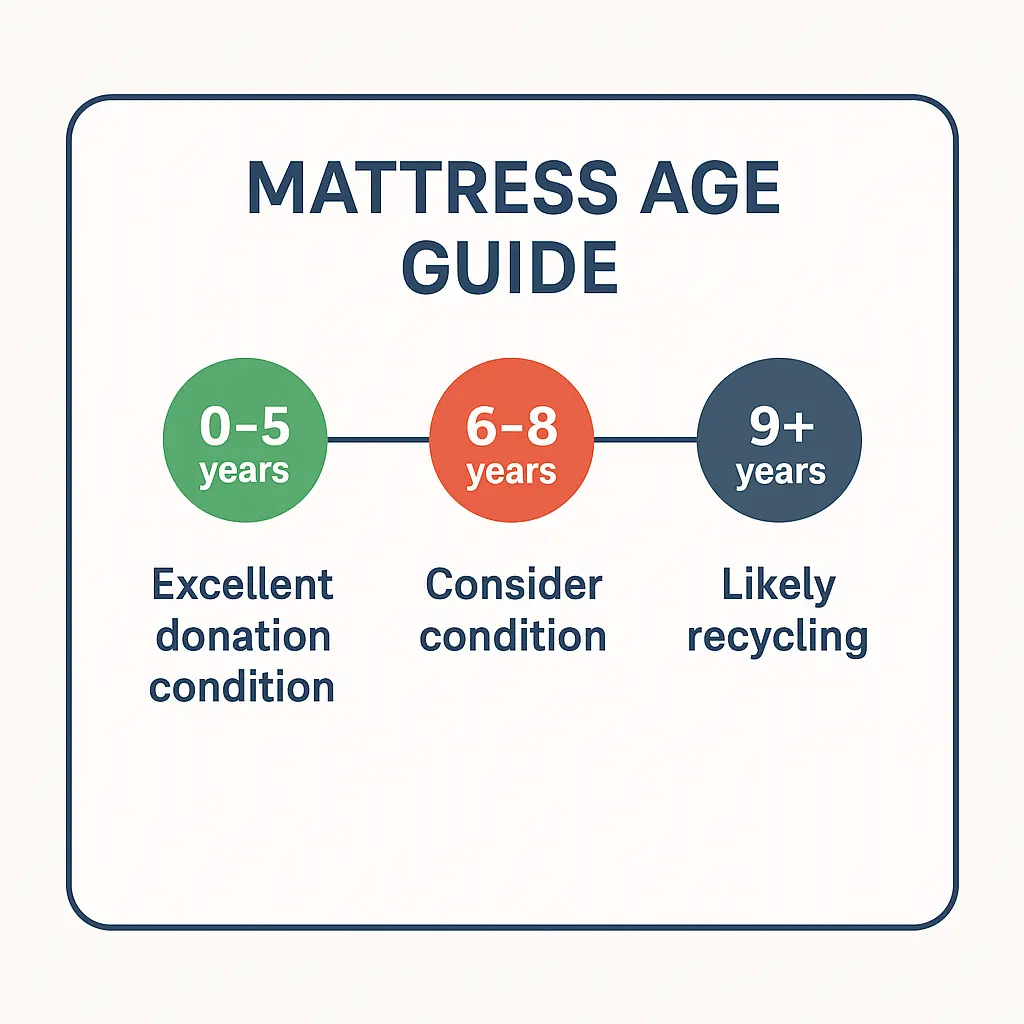
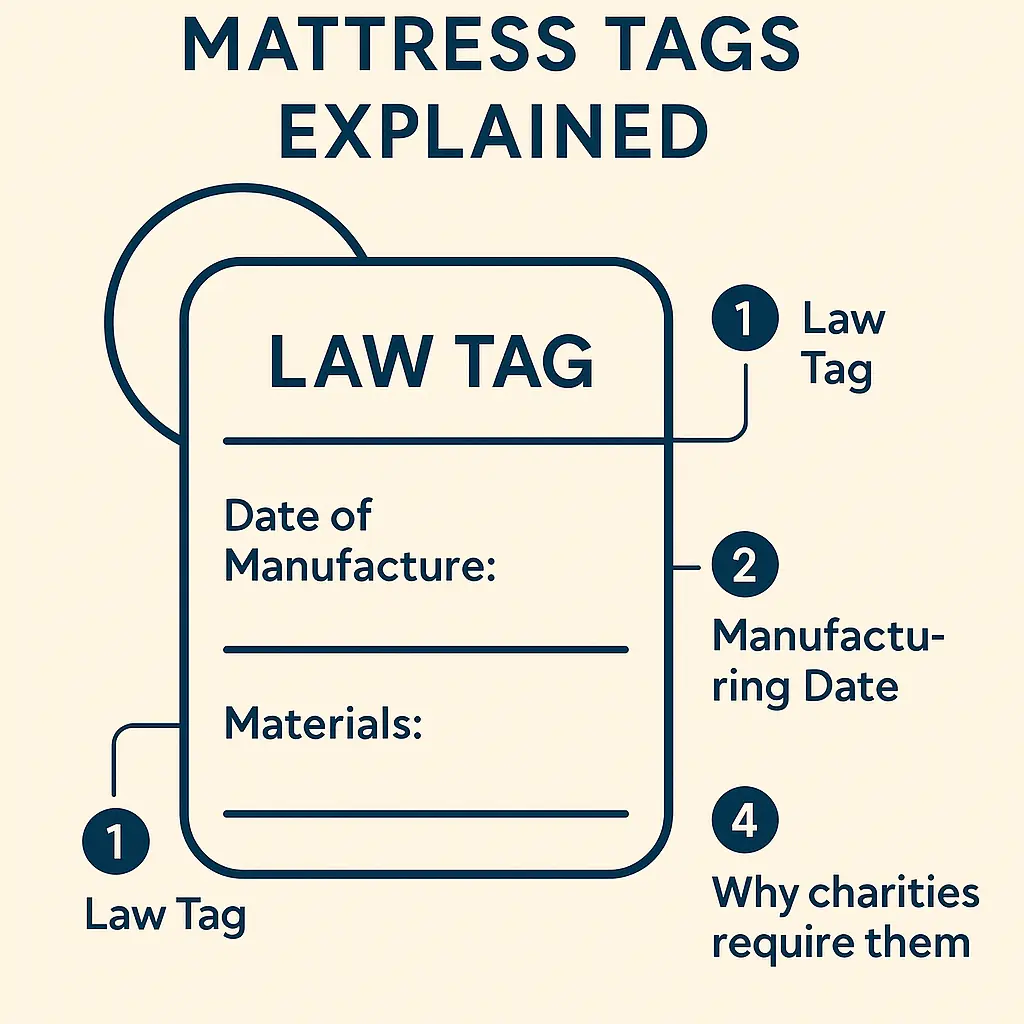
Age matters too. Many donation centers prefer a manufacturing date within the last 5–8 years, but some smaller charities or community groups may be more flexible if the mattress is still exceptionally clean.
Contacting a local charity directly is important to confirm their specific needs and donation requirements. If you’re unsure, take a clear photo of the tag showing the earlier manufacturing date and send it when scheduling your donation.
If the mattress doesn’t meet these conditions, don’t worry—recycling options are available, and we’ll cover them shortly.
Before donating, make sure your mattress meets basic hygiene and safety standards, which you can review in this mattress regulations and donation requirements guide.Step 1 — Inspect and Prepare Your Mattress
Do a Quick Self-Inspection
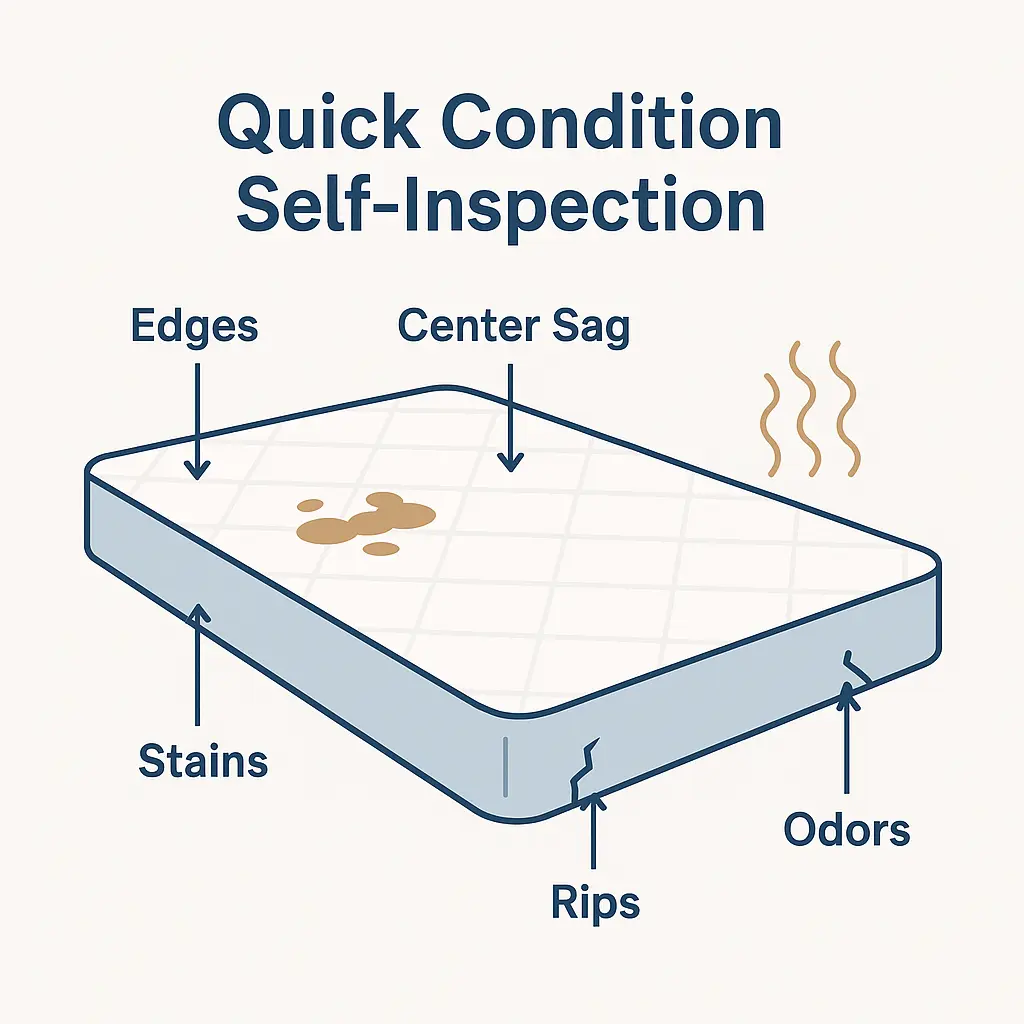
Start by assessing the mattress from top to bottom. Run your hand across the edges, look for center sagging, and check under the corners where dust tends to accumulate.
Lift the mattress and inspect seams closely—this is where bed bugs typically hide. If your mattress passes the visual and smell check, it’s ready for cleaning.
Clean and Prep the Mattress
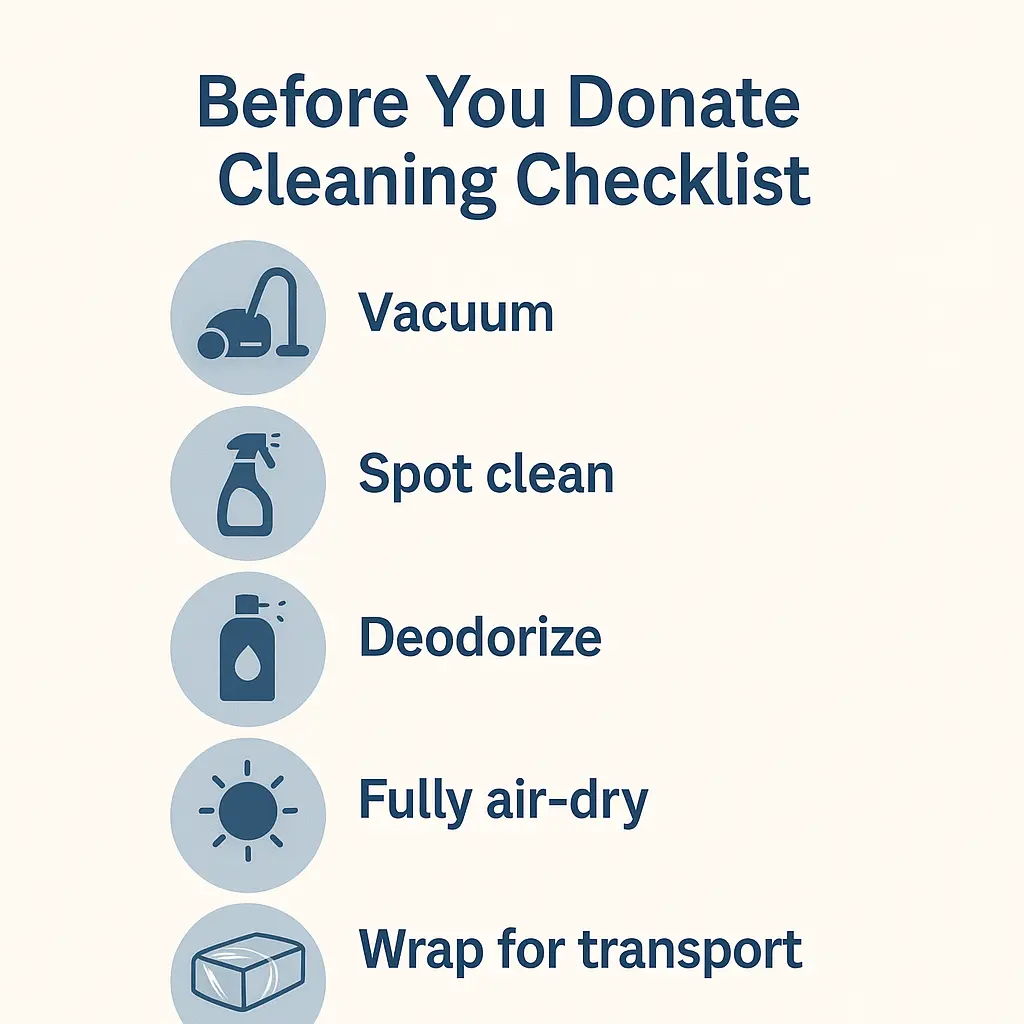
Charities expect donated goods to be fresh, hygienic, and ready for reuse. Here’s how to prep your mattress properly:
- Remove all bedding, including sheets, toppers, pads, and pillows.
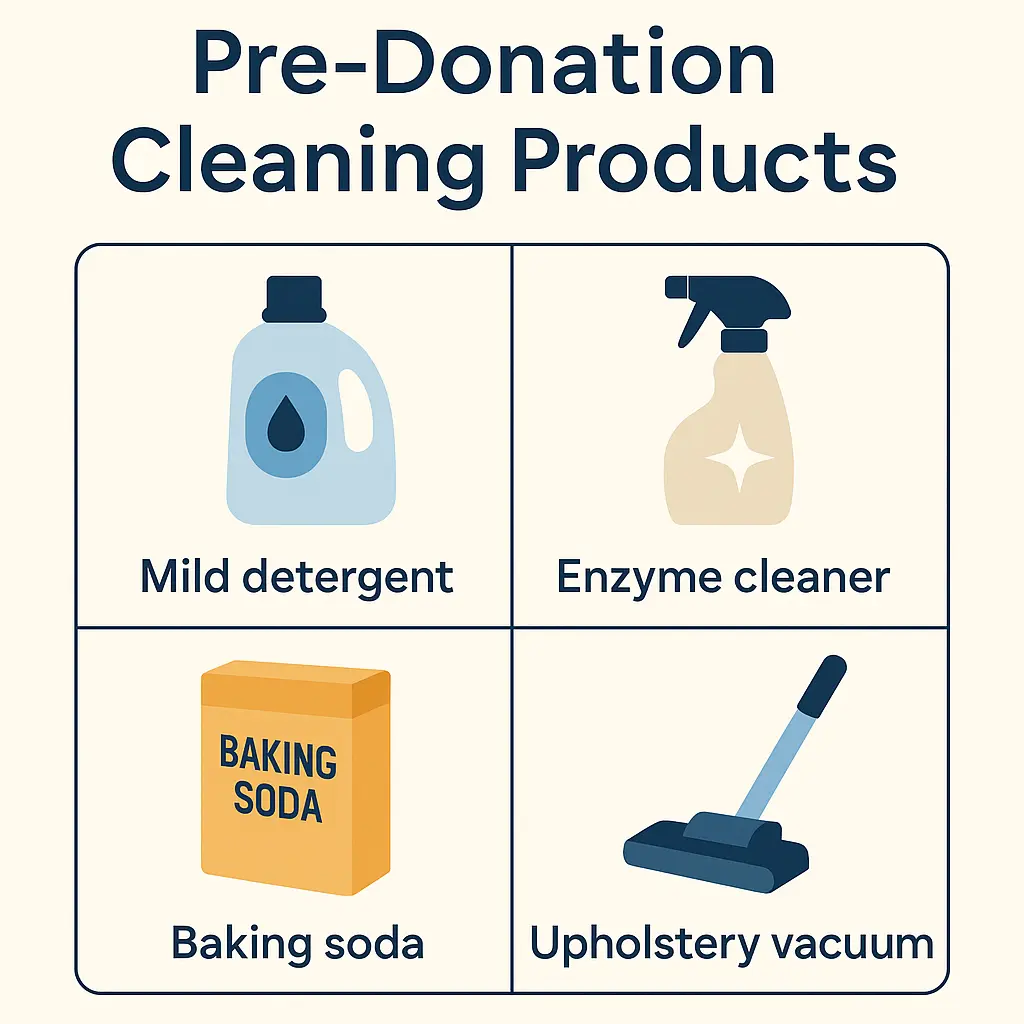
- Vacuum the entire mattress using an upholstery attachment.
- Spot-clean stains with a mild detergent or enzyme cleaner.
- Deodorize by sprinkling baking soda and letting it sit for an hour.
- Air dry the mattress completely before wrapping.
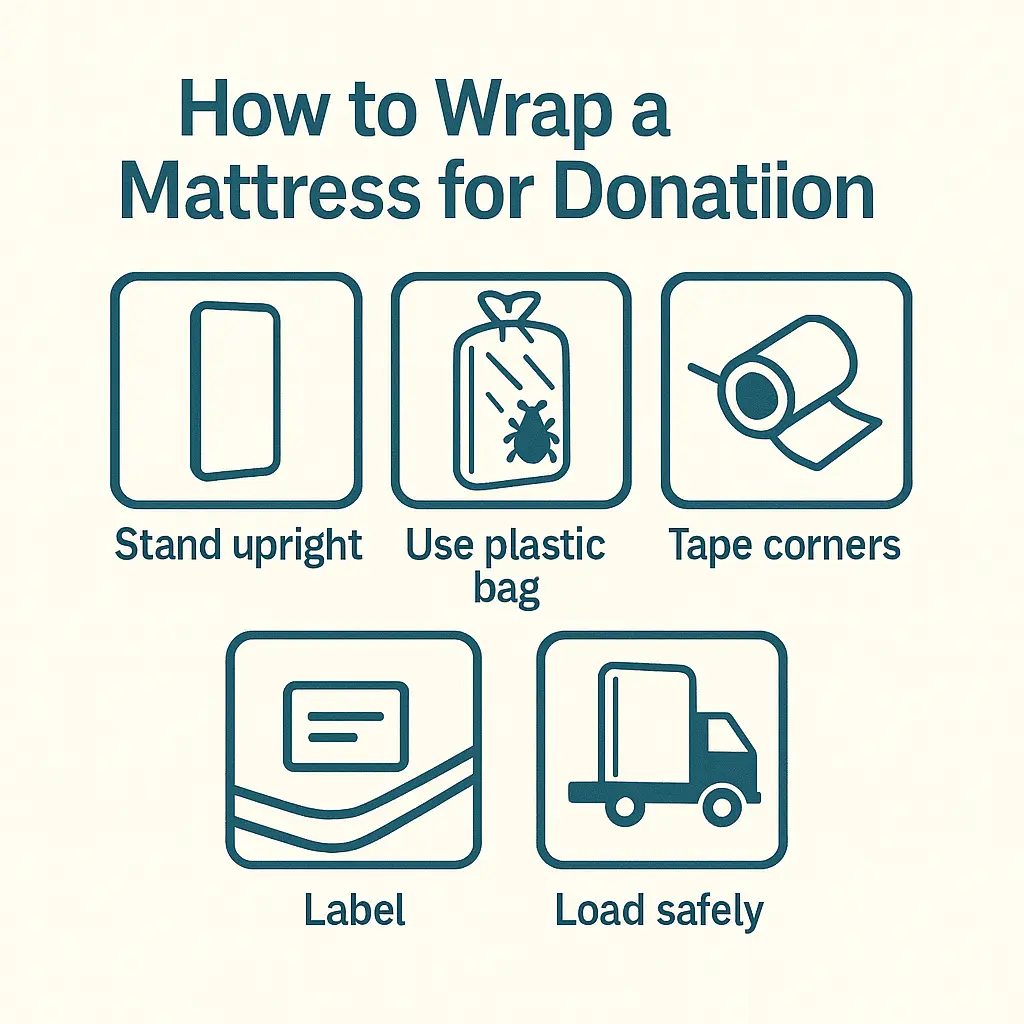
- Wrap in a mattress bag to protect it during transport. You can purchase one at Home Depot, Walmart, Amazon, or a local moving supply store.
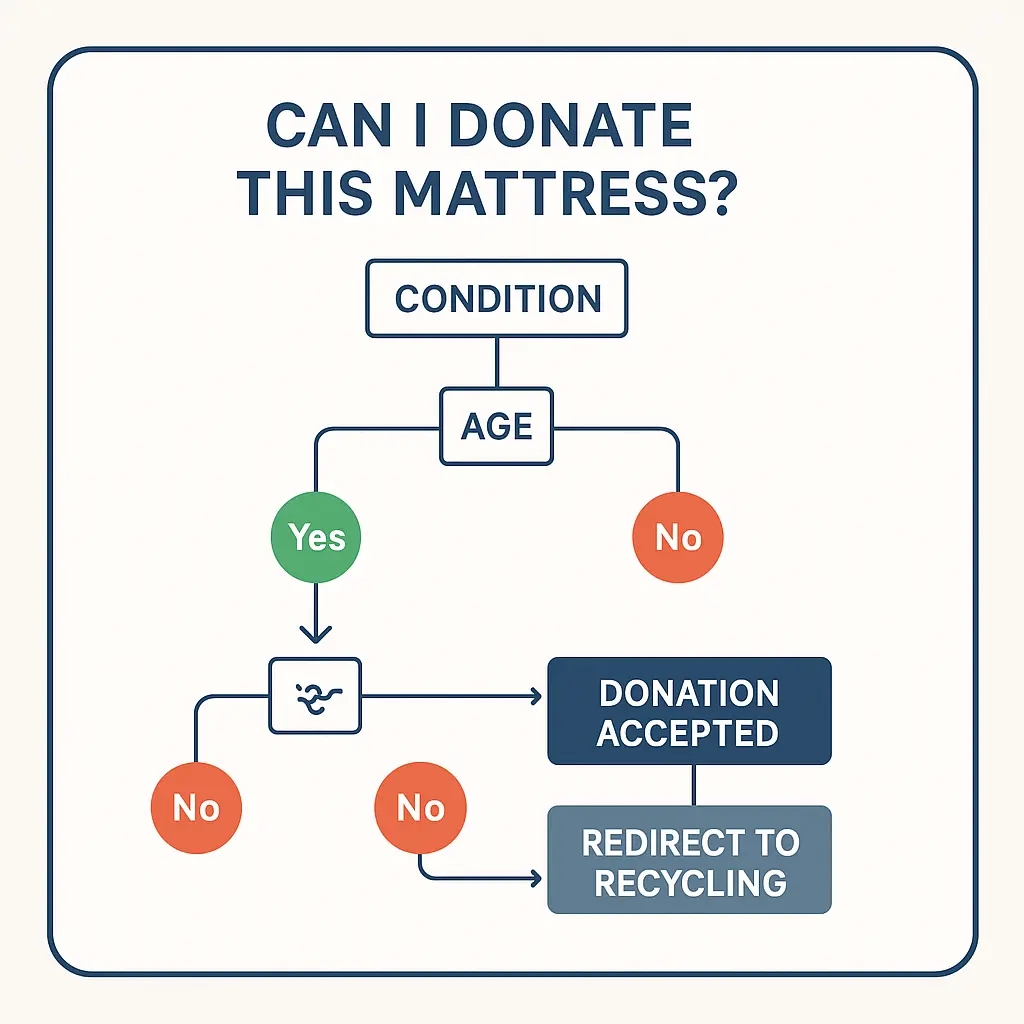
This preparation step ensures the mattress is safe for the next user and aligns with charity health standards.
If your mattress has been used by allergy-sensitive sleepers, compare its condition to the tips in our mattress hygiene and allergy-safe donation standards.Step 2 — Donation vs. Recycling: Which Is Best for You?
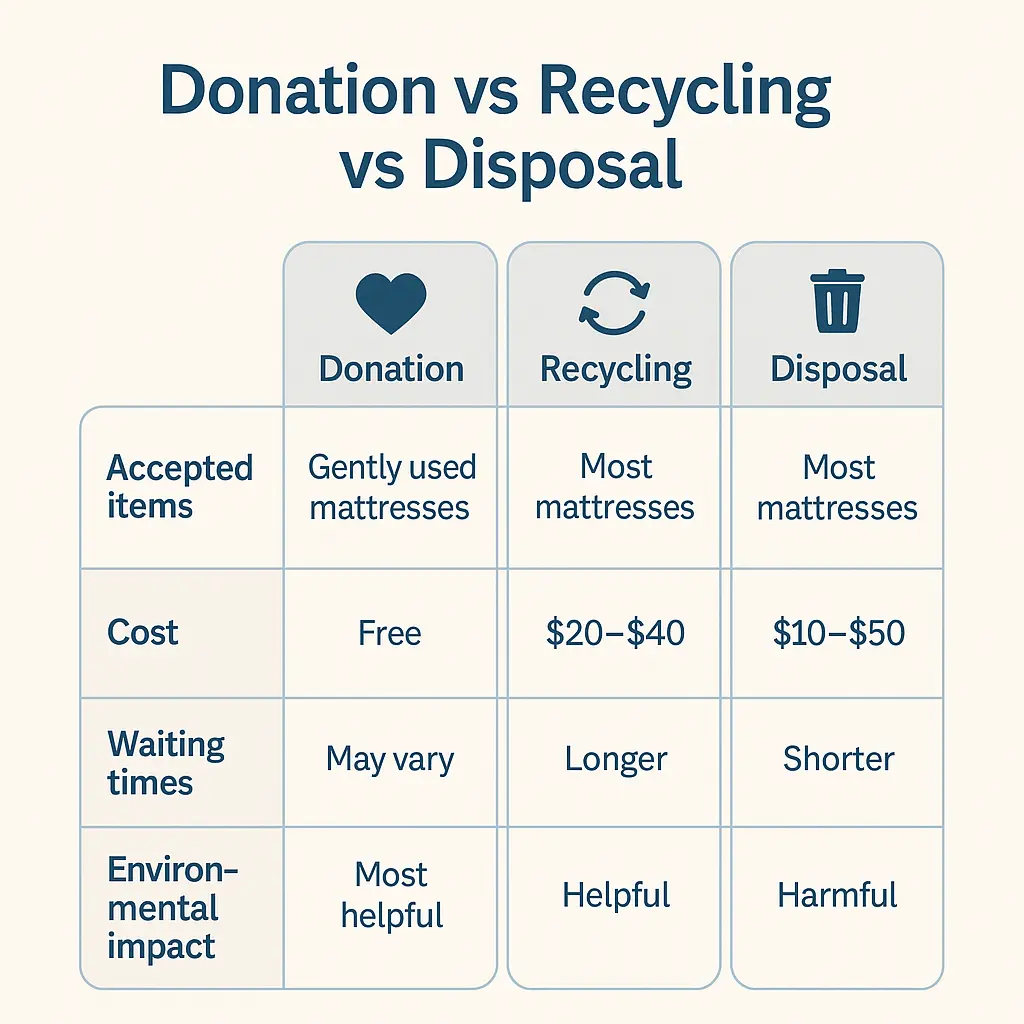
Donation is the best option when your mattress is in usable, clean condition. But if it has deep sagging, severe wear, or torn fabric, recycling is the better solution.
Donation Benefits
- Helps families in need
- Reduces landfill waste
- May qualify for tax deductions
- Supports local nonprofits
Recycling Benefits
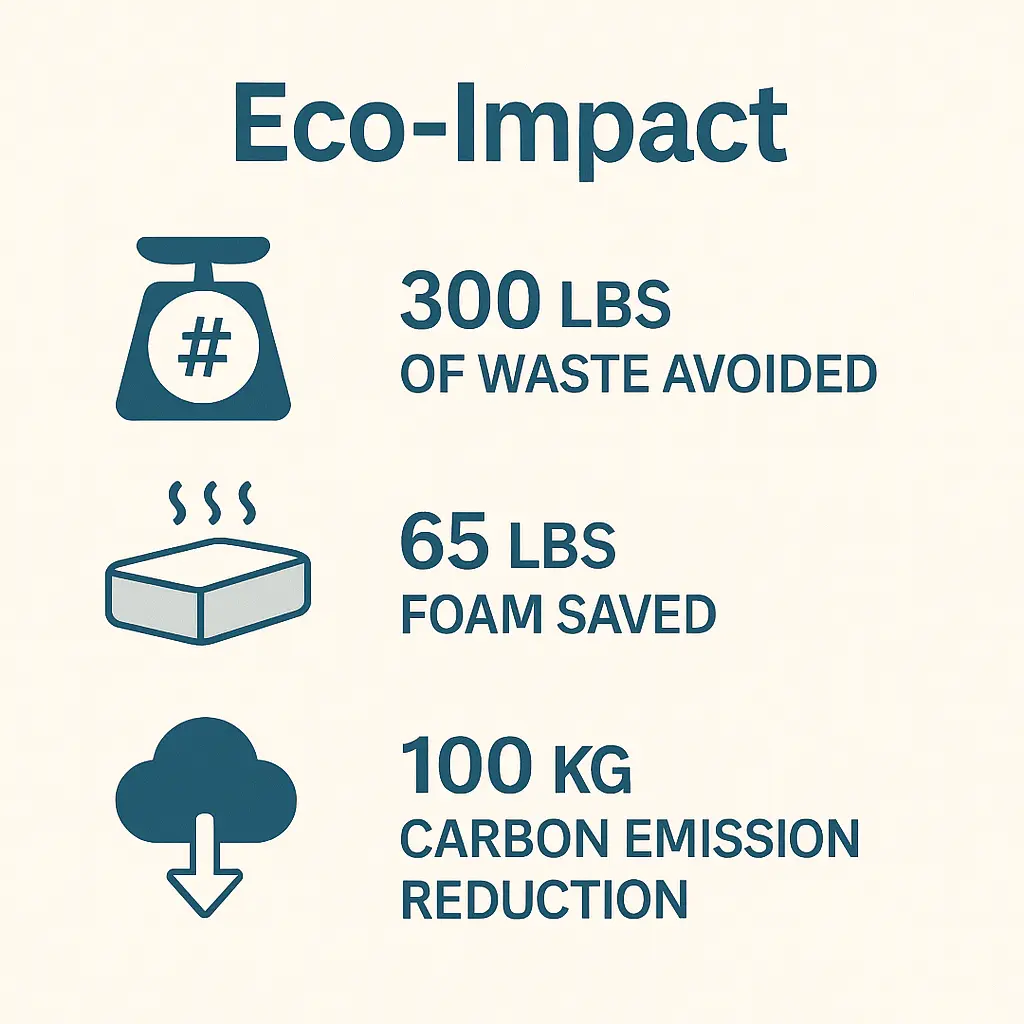
If your mattress cannot be donated, recycling prevents nearly 80–90% of materials from going to waste. Recyclers break a mattress into components:
- Foam → carpet pads
- Steel springs → scrap metal
- Fabric → insulation
- Wood → mulch
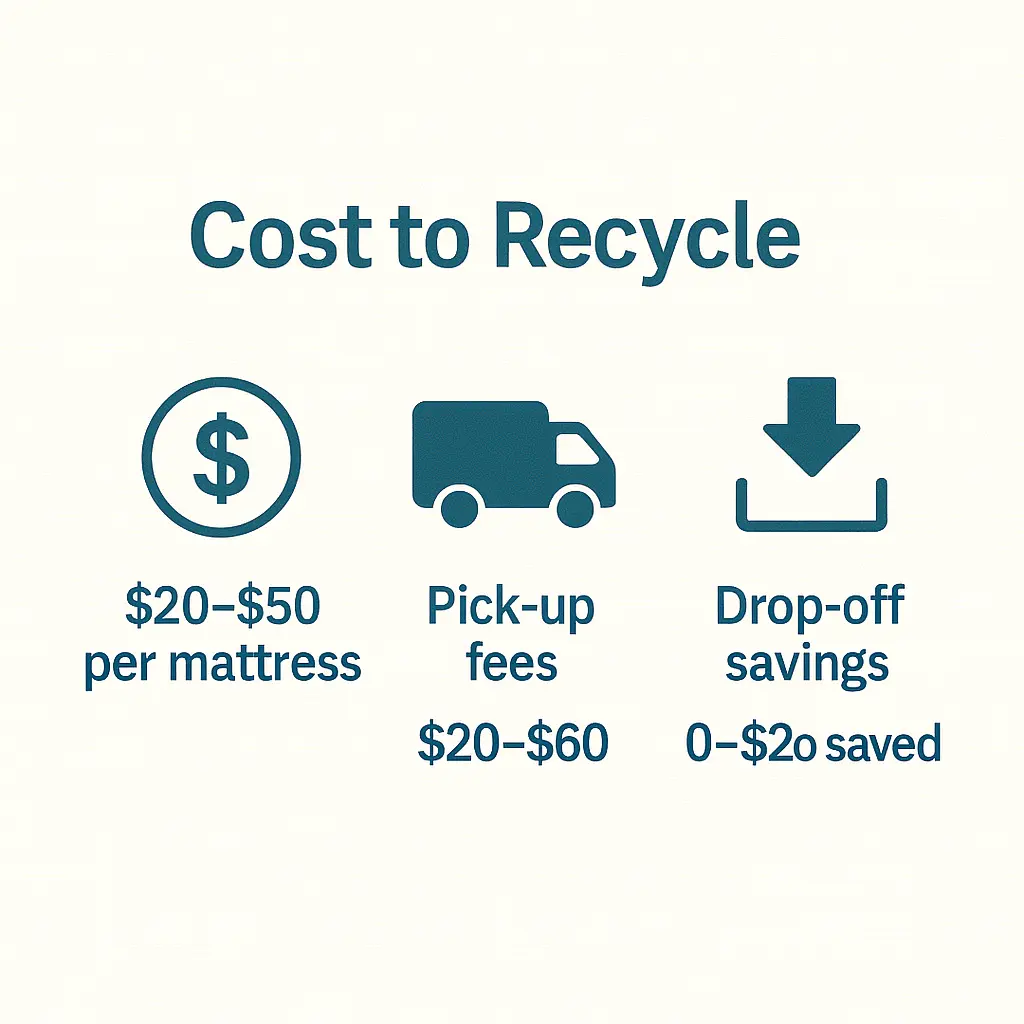
This option often requires a small fee, though some cities offer free drop-off days or reduced rates.
Step 3 — Choose the Right Donation Option
Not every organization accepts mattresses, so it’s important to choose the right outlet based on your location and the condition.
National Charities That Accept Mattresses
Not all locations accept mattresses, so call ahead. If you're looking for more information before disposing of or replacing your bed, here’s a guide to the best mattress features for your comfort and budget.
- Habitat for Humanity ReStores Some accept mattresses and box springs, depending on local rules.
- The Salvation Army Many locations offer free pickup, especially for larger items.
- Furniture Bank Network Supports families transitioning out of homelessness or crises.
- Arc Thrift Stores & St. Vincent de Paul Acceptance varies; always confirm in advance.
Local Charities & Community Groups
These groups often have more flexible acceptance rules:
- Homeless shelters
- Domestic violence shelters
- Refugee resettlement agencies
- Church outreach programs
- Youth homes
- Transitional housing facilities
It's important to contact a local charity directly to confirm whether they need a mattress and their specific donation requirements.
Always call first—some may accept gently used mattresses even if national chains cannot.
If your mattress can’t be donated, consider alternative reuse ideas similar to these eco-friendly tips for repurposing bedding.Alternative: Facebook Marketplace “Free” Section
If no charity accepts your mattress, but it’s still safe and clean, listing it as FREE—pick up only on Facebook Marketplace or Nextdoor is an excellent community option. Many families search for donated goods like mattresses, furniture, and bedding. This ensures your mattress goes directly to someone who needs it.
Step 4 — Schedule Pickup or Drop-Off
Pickup Options
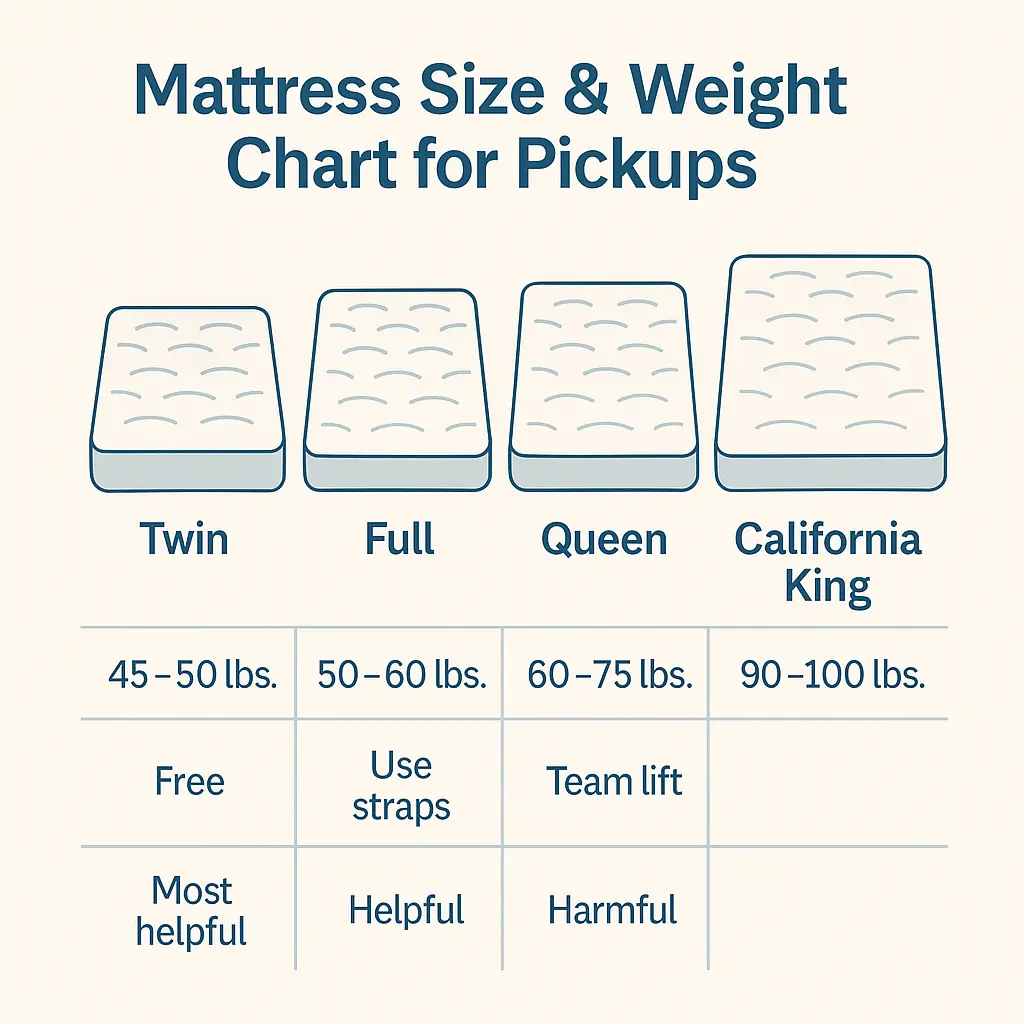
Many charities offer free pickup, though the availability depends on local staff and truck schedules. In some areas, pickup dates fill quickly, and you may need to schedule an earlier date than expected. Priority pickup—often for a small fee—may also be available.
When scheduling pickup:
- The mattress must be wrapped
- Placed outside or in an accessible area
- Drivers usually cannot enter your home.
- You may need to fill out a donation form in advance.
Drop-Off Options
If you choose to transport the mattress yourself:
- Bring it to a Habitat ReStore, Salvation Army center, or local thrift store
- Make sure it’s wrapped.
- Staff will guide you through the donation process.
- Some cities also offer drop-off days for mattresses with looser rules on item type.
Drop-off generally speeds processing and may increase the likelihood that your mattress will be accepted.
Step 5 — What Happens After You Donate?
Once your mattress is picked up or dropped off, you may be interested in learning more about the White Glove mattress delivery service:
- It is inspected for cleanliness and safety
- Some organizations sanitize items before distribution.
- Mattresses in excellent condition go directly to families in need.
- Others are sold in thrift stores to fund social programs.
- Mattresses that fail final inspection are recycled responsibly.
This ensures your donation has maximum community impact.
How Mattress Donations Support Local Families
Donating a used mattress does more than free up space—it can directly support local families in dire need of a safe place to sleep. Many charitable organizations accept donated mattresses in good condition. Instead of sending old mattress materials to landfills, your donation gives them a meaningful second life.
Many city recycling programs and non-profit organizations also offer responsible mattress recycling options. These recycling programs break down memory foam, steel springs, and fabric so each component can be reused. Some groups even offer pickup services, making the process simple and convenient for donors.
Before donating, make sure your mattress:
- It is clean, odor-free, and free of extreme sags
- Contains no bed bugs or structural damage
- Meets the charity’s criteria—always contact them to determine acceptance
- Is wrapped or bagged for sanitation
Thrift stores and shelters rely on donated items to stock their programs. When you donate items like mattresses, furniture, or household goods, they either go directly to families or are sold to raise money for housing, employment, and community initiatives.
You can also donate stuff such as:
- Clothing
- Toys
- Linens and bedding
- Small appliances
If a mattress can’t be donated, mattress recycling is still a responsible choice. And for direct giving, platforms like Facebook Marketplace let you list household items for free pick up, connecting you with local families who need them most.
By donating, you reduce waste, support charitable organizations, and help ensure valuable resources are put to good use.
Step 6 — Tax Deductions and IRS Requirements
If you donate to a registered 501(c)(3) organization, your mattress may qualify for a charitable tax deduction. Here’s what you need:
- Donation receipt from the charity
- Estimated fair market value (usually $30–$150 depending on condition)
- IRS Form 8283 if your total non-cash donations exceed $500
Keep the receipt for tax season. The IRS does not allow deductions for items left at non-charity locations (e.g., curbside giveaways or Marketplace donations).
Before scheduling pickup or drop-off, verify your bed’s exact measurements using our mattress size and compatibility chart.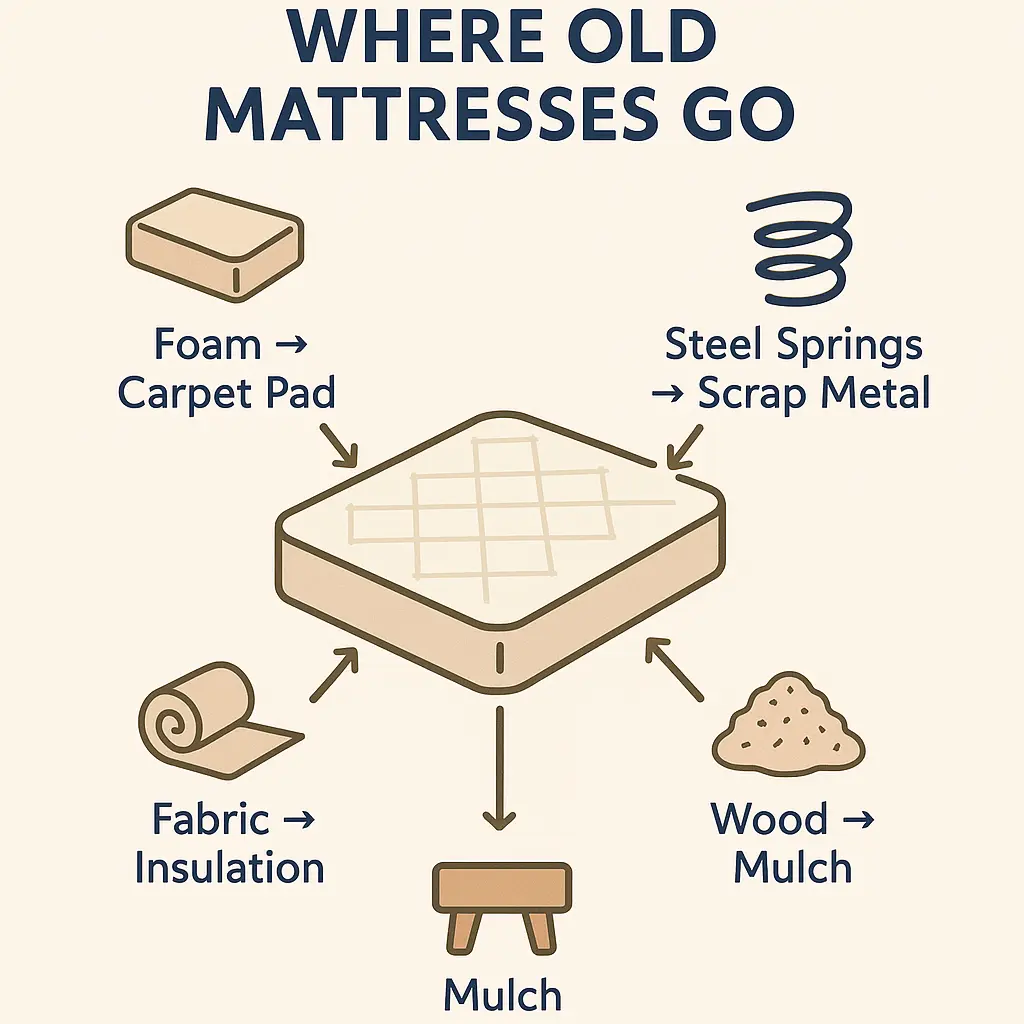
Alternatives When Donation Isn’t Accepted
If your mattress cannot be donated:
Recycle It
- Find local mattress recyclers
- Use programs like Bye Bye Mattress.
- Check the city recycling program.s
Upcycle It
Creative reuse options include:
- Patio seating cushions
- Pet bedding
- Insulation for garage or shed projects
- Foam padding for crafts
For more inspiration, check out these creative ways to repurpose old pillows.
Junk Removal (Last Resort)
Companies like 1-800-GOT-JUNK can responsibly dispose of mattresses, though you’ll need to pay a fee.
Once these steps are complete, your mattress is officially ready to support someone in need.
Conclusion
Donating a mattress is one of the simplest ways to help families, reduce waste, and support local charities.
Whether you schedule a free pick up, drop it off at a donation center, or give it directly to someone in your community, your mattress can make a meaningful difference.
Use the steps in this guide—inspect, clean, schedule, and confirm—to complete the donation process with confidence.
With a little preparation, your old mattress can enjoy a second life—and if you want to extend your mattress lifespan, there are practical ways to keep it comfortable and supportive for longer.
FAQs
Can mattresses be donated to charity?
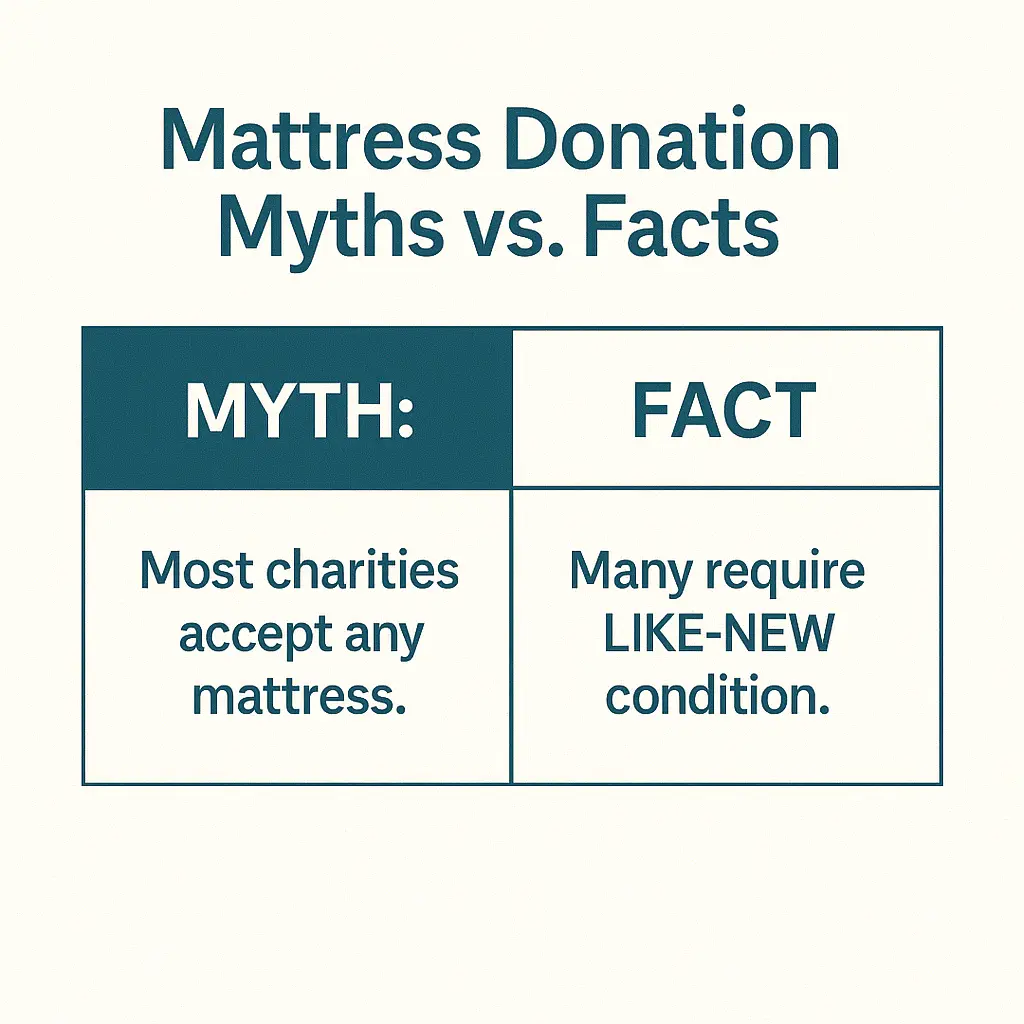
Yes—many charities accept gently used mattresses as long as they meet specific condition standards. They must be clean, odor-free, stain-free, and have no structural issues. Always call ahead to ensure the organization currently accepts mattresses.
Can I donate a mattress to Goodwill?
Some Goodwill locations accept mattresses, but many do not due to health and sanitation regulations. Acceptance policies vary by region, so contact your local store before attempting a drop-off.
What is the best way to get rid of old mattresses?
The best option depends on the condition of your mattress. If it’s clean and in good shape, donation is ideal. If it’s worn or damaged, recycling is the most eco-friendly alternative. Only choose disposal as a last resort.