(Last Update: 11/21/2025)
Choosing the right mattress isn’t just about comfort — it’s about biology, lifestyle, and the evolving needs of your body at different stages of life.
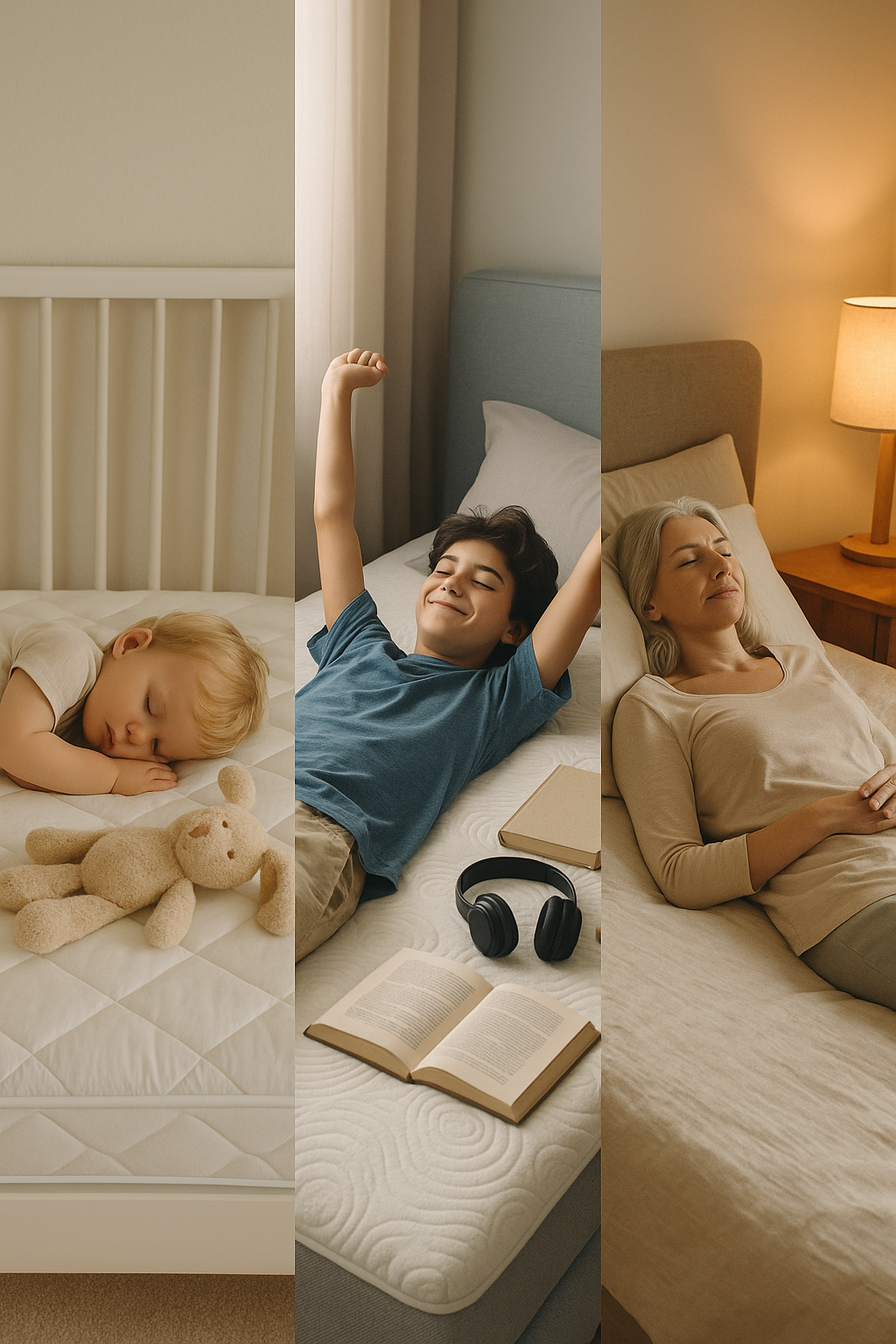
As we age, our bones, muscles, and sleep cycles change dramatically, influencing how firm or soft a mattress should be, what materials work best, and which features support long-term health. Babies require firm, breathable surfaces for safety. Children need durability and proper spinal alignment for growth.
Teens experience rapid development and temperature fluctuations. Adults focus on long-term support and pressure relief, while seniors prioritize mobility, joint comfort, and pain reduction.
Sleep experts consistently agree that age is one of the most overlooked factors in mattress shopping. Many people choose a bed based solely on price or brand, without considering how aging affects their comfort needs.
This guide simplifies the mattress selection process by breaking it down by age group, using research-backed recommendations, expert advice, and practical shopping insights.
By the end, you’ll know exactly how to choose the right mattress for yourself and your loved ones at any age.
Choosing mattresses for different age groups can be confusing, and reviewing mattress industry regulations and safety standards helps readers understand ideal firmness, materials, and certifications from infancy to senior years.
1.How Age Affects Comfort, Support, and Sleep Quality
Sleep needs shift significantly from infancy through senior adulthood, and those biological changes directly influence how a mattress should feel and perform. As the body grows, matures, and eventually loses muscle elasticity, the way you interact with a mattress transforms.
Younger sleepers need stable, supportive surfaces to maintain proper spinal alignment and healthy growth. At the same time, adults require pressure relief and spinal alignment to counter stress, poor posture, and strain.
Seniors often need softer comfort layers combined with strong underlying support to accommodate sensitive joints and reduced mobility.
Allergy-sensitive sleepers across all ages may benefit from learning how wool mattresses improve airflow, comfort, and skin friendliness.
1.1 Body Changes Across the Lifespan
Physical development affects how weight is distributed across the mattress and which areas require additional cushioning or reinforcement. Babies and toddlers have lighter body weight and need firmer surfaces for safety, while children require balanced support as their bones grow rapidly.
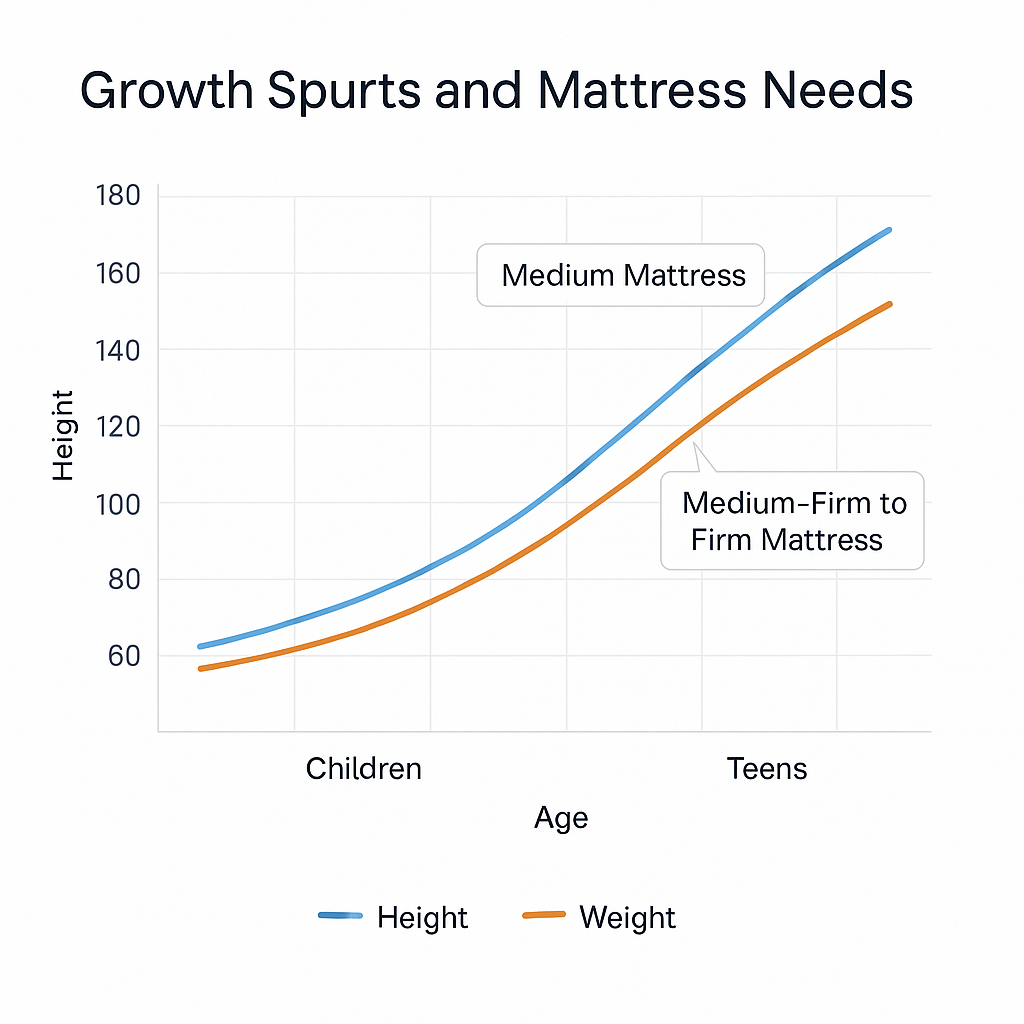
Teens experience quick changes in height and weight, which increases pressure on the shoulders, hips, and spine. Body shape, such as broader shoulders or hips, also influences the type of mattress firmness and contouring needed for each age group to ensure optimal comfort and spinal alignment.
Adults often deal with stress-related tension or occupational strain that demands more targeted pressure relief. Seniors experience natural declines in muscle tone and joint stability.
Key changes that affect mattress choice include:
- Pressure point distribution: shifting needs for cushioning around shoulders, hips, and lower back
- Muscle/tissue elasticity: Declining elasticity increases sensitivity to stiff mattresses
- Joint mobility: reduced range of motion leads to discomfort on overly firm surfaces
- Weight fluctuations: growth in teens and middle-aged weight gain require stronger support layers
- Necessary support: Each age group, especially children and teenagers, requires the necessary support for healthy development and proper spinal alignment
These changes explain why firmness, pressure relief, and spinal alignment must be adjusted at different ages.
1.2 Sleep Architecture by Age
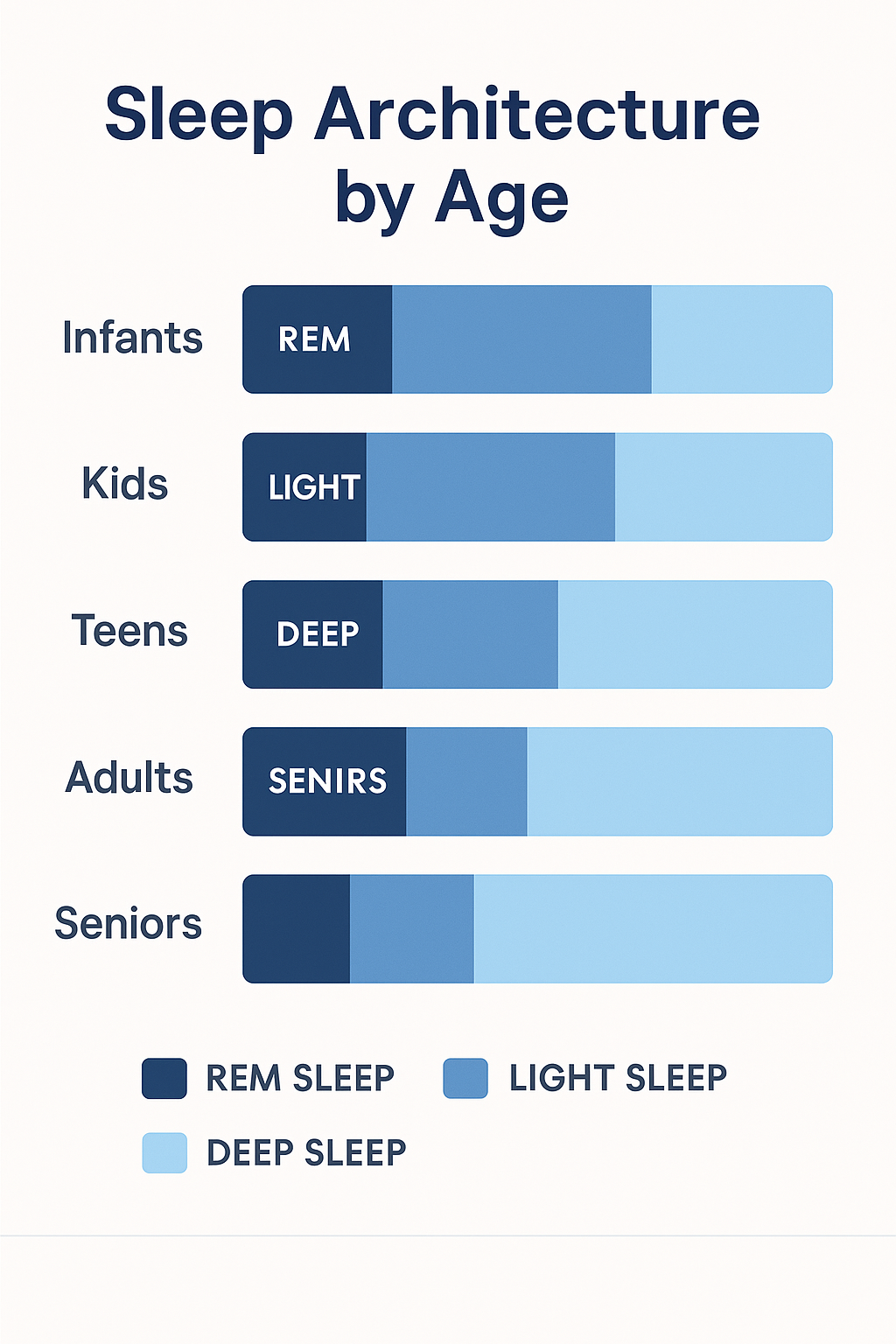
Sleep patterns evolve with age, altering how deeply and how long we rest each night. Infants spend most of their sleep in REM, while young children experience long periods of restorative deep sleep. Teens often struggle with circadian rhythm shifts. Adults typically get less deep sleep due to stress, and older adults may wake more often due to pain, reduced melatonin, or medical conditions.
Core sleep architecture differences across age groups include:
- Deep sleep changes: decreases steadily with age, requiring better pressure relief
- REM changes: infants require breathable firmness; adults need support that reduces disruptions
- Fragmentation: seniors experience more nighttime awakenings, needing stable motion isolation
- Wake frequency: increases with age.
Understanding these sleep-cycle differences helps you choose a mattress that supports both biological needs and comfort preferences at every life stage.
2. Core Mattress Factors (and How Their Importance Changes With Age)
The best mattress for any person depends on their age, body condition, and natural sleep patterns. While firmness, support, pressure relief, temperature control, motion isolation, and mobility are universal mattress considerations, their importance shifts significantly across the lifespan. Choosing a good quality mattress is essential to ensure durability and consistent support as your needs change over time.
Babies require firm stability for safety, children and teens need balanced support for alignment and growth, and adults often benefit from pressure-relieving materials that improve recovery. Seniors experience reduced joint cushioning and mobility challenges. Understanding how these core features evolve with age makes it easier to choose a mattress that truly supports long-term comfort and health.
Personal preference also plays a key role in mattress selection, as comfort and support needs can vary widely between individuals.
If you're exploring hybrid or innerspring options, this Simmons mattress guide helps clarify support levels for kids, adults, and seniors.
2.1 Firmness
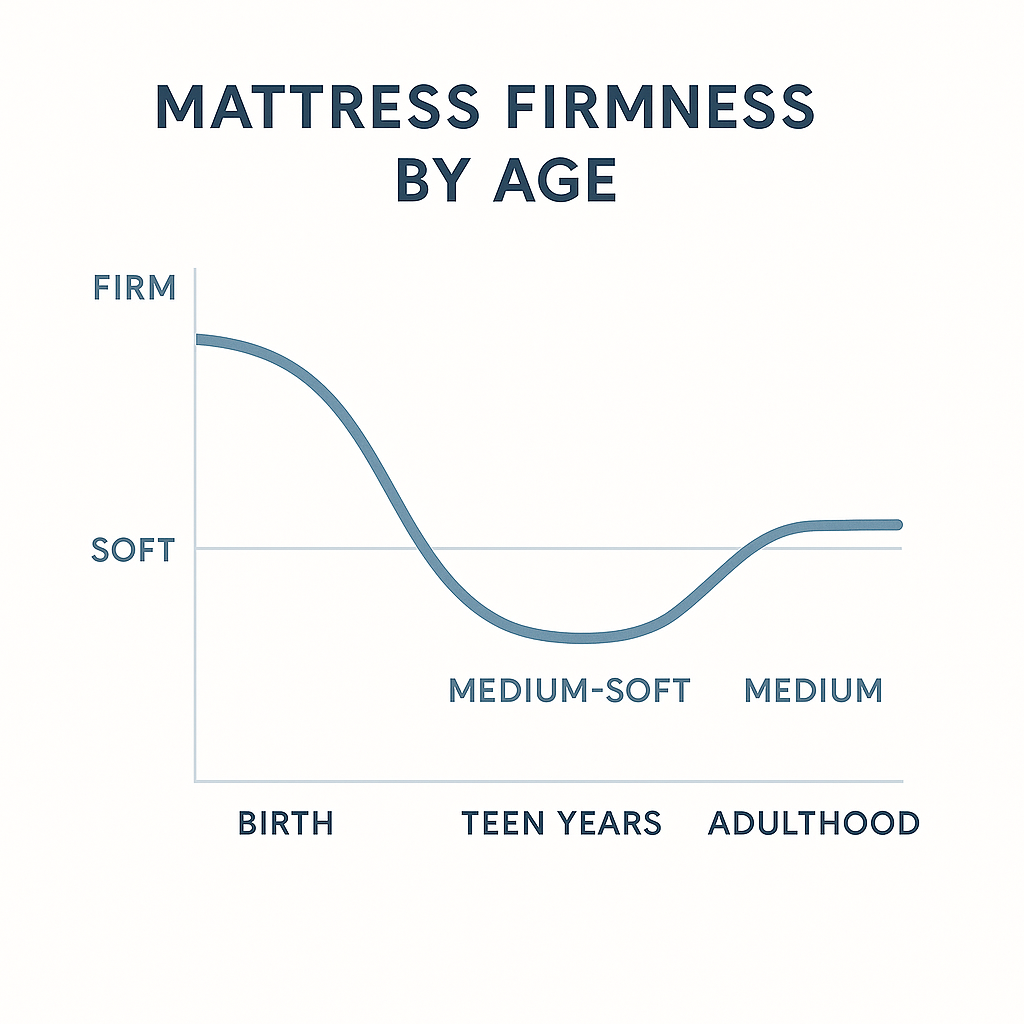
Firmness requirements change dramatically from infancy through senior years because the body’s weight, tissue sensitivity, and spinal needs evolve. Choosing a firm or soft mattress should be based on age, body weight, and sleep position to ensure comfort, proper support, and healthy spinal alignment.
Babies must sleep on firm crib mattresses to prevent sinking and ensure safe breathing. Children benefit from a medium-firm mattress that supports spinal development. Teens generally require medium to medium-firm mattresses for posture and comfort as they grow.
Adults often prefer medium-firm mattresses for the best balance of contouring and support. At the same time, seniors may need softer comfort layers to cushion pressure points, paired with a firm underlying support to provide stability.
Typical firmness needs by age:
- Babies: Firm, non-compressible surface for safe sleep
- Teens: Medium to medium-firm for balanced support
- Seniors: Medium-soft to medium-firm to reduce joint and shoulder pressure
Selecting the right mattress firmness is essential for promoting healthy sleep and spinal alignment at every age.
2.2 Support / Spinal Alignment
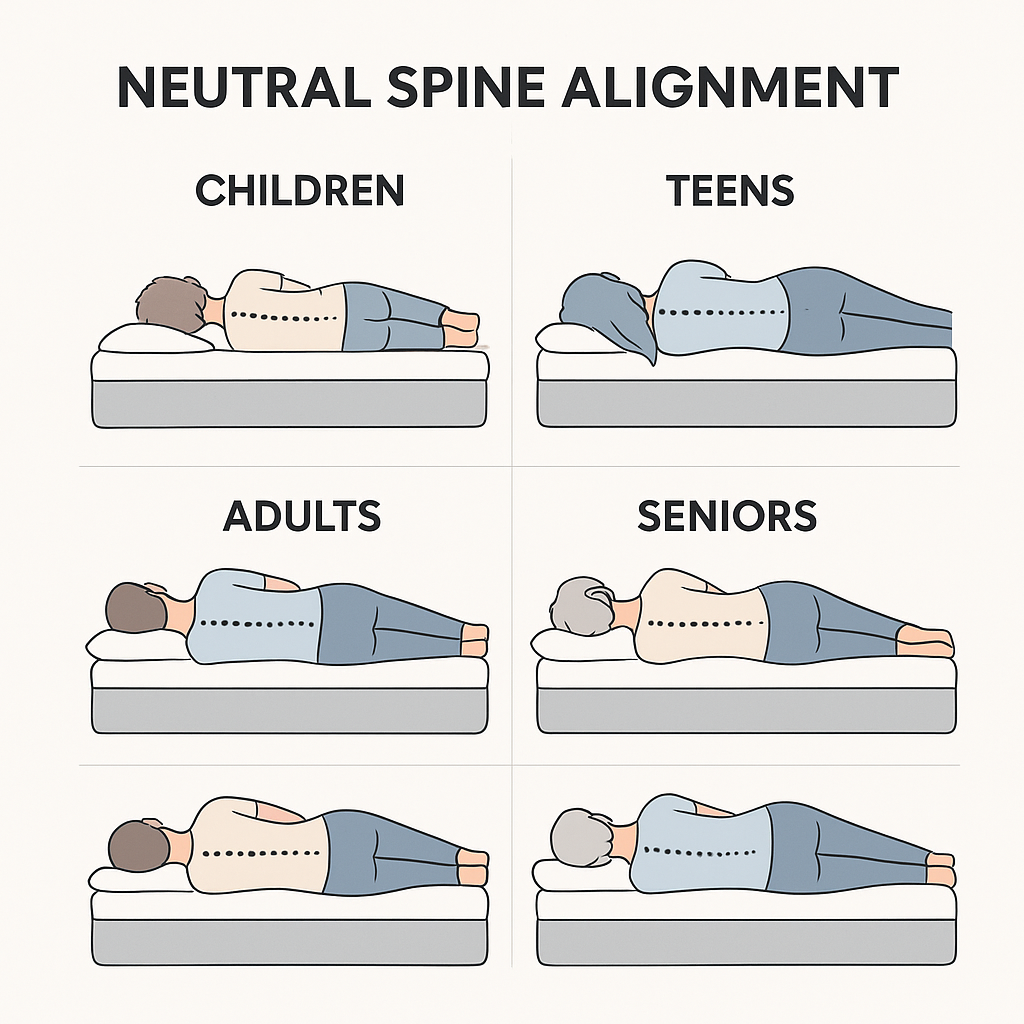
Spinal alignment is critical at every age, but for different reasons. Infants need a stable, flat surface that maintains a neutral posture.
Children and teens require mattresses that preserve natural spinal curvature during growth.
Adults may experience alignment issues from work posture or daily strain, making targeted lumbar support beneficial. Seniors often struggle with joint stiffness, so contouring surfaces that maintain spine alignment while reducing pain are ideal.
Good support prevents sagging, reduces long-term discomfort, and helps maintain proper posture at each life.
2.3 Pressure Relief Needs
Pressure relief becomes more important as body weight increases and tissues lose elasticity. Teens experiencing rapid growth benefit from contouring that eases tension on the shoulders and hips. Certain mattress materials, such as memory foam, latex, and hybrid options, help relieve pressure points by providing targeted support and improving comfort and sleep quality.
Adults often carry stress in their lower backs or necks, requiring deeper cushioning. Seniors have the highest pressure relief needs due to thinning skin, arthritis, and reduced muscle density.
Age-related pressure relief priorities:
- Children: Light contouring to support developing joints
- Adults: Balanced relief around the lumbar spine and shoulders
- Seniors: Deep relief to prevent pain in hips, shoulders, and knees
2.4 Temperature Regulation
Temperature sensitivity changes throughout life. Children and teens often sleep warmer than adults do, partly because of their higher metabolism and hormones. For them, choosing a mattress that helps regulate body heat is important to prevent overheating and ensure restful sleep. Adults may experience heat retention from stress, body weight, or medical conditions.
Seniors typically prefer more neutral temperatures but may benefit from cooling if dealing with night sweats or bedding sensitivity. Breathable materials like latex, coils, gel-infused memory foam, and gel-infused foams help dissipate heat and maintain a comfortable sleep environment for all ages.
2.5 Motion Isolation
Motion isolation matters most for adults and seniors, especially those who share a bed. Partners who shift frequently can disturb sleep cycles, reducing the restorative quality of rest.
Children and teens rarely need strong motion isolation unless they share a sibling bed or experience restless movement, as adults and seniors do.
Who needs motion isolation most:
- Adults: For couples and light sleepers
- Seniors: To prevent sleep fragmentation and improve comfort
- Pregnant women: To reduce disturbance when repositioning is difficult

2.6 Mobility & Ease of Getting Up
Mobility becomes crucial for toddlers transitioning to a first bed, adults recovering from physical strain, pregnant individuals, and especially seniors.
A mattress that is too soft can make standing difficult, while one that is too firm may increase pressure on joints. Strong edge support, responsive materials, and moderate firmness help sleepers get in and out of bed safely.
Good edge support enhances stability and safety, especially for children and seniors who may sit or sleep near the edge. Choosing a responsive mattress also makes repositioning and getting out of bed easier, as it quickly adapts to movement and prevents feeling stuck.
Key mobility priorities:
- Toddlers: Low height and stable edges
- Pregnant sleepers: Easy surface response
- Seniors: Strong edges + supportive surface for standing balance
3. Mattress Recommendations by Age Group
Choosing a mattress based on age ensures proper comfort, safety, and long-term spinal health. The needs of infants, children, teens, adults, and seniors vary dramatically because the body changes at each stage of life.
- There are mattresses designed specifically for infants, children, teens, adults, and seniors, each offering features tailored to their unique needs.
- Growth patterns, hormone shifts, weight distribution, joint sensitivity, and sleep cycles all influence the ideal firmness, support level, and mattress materials.
This section breaks down each age group with clear, research-based recommendations so you can confidently match the right mattress to the right sleeper.
3.1 Infants (0–2 Years): Safe & Firm Support
Infants have the most specific sleep needs of all age groups. At this stage, safety outweighs comfort because babies cannot regulate their movements or reposition themselves safely.
A firm, breathable crib mattress is required to prevent sinking and reduce the risk of suffocation. Plush surfaces, memory foam, and pillow-top designs are unsafe for infants because they cause excessive sinkage and trap heat. For the first two years of life, a parent’s priority should be a stable, safety-certified mattress with no soft cushioning.
- Crib mattress sizing is also critical. The mattress must fit tightly within the crib frame, with no gaps, so the infant cannot roll into any empty spaces.
- Breathable materials, such as firm, lightweight foam or dual-sided infant/toddler designs, help regulate temperature and support spinal alignment during rapid development.
- To maintain hygiene and extend the lifespan of the crib mattress, using waterproof mattress protectors is highly recommended. Mattress protectors help prevent stains from spills or accidents, manage bedwetting, and keep the mattress clean and in good condition.
Most crib mattresses should be replaced once the child transitions to a toddler bed, unless it is a dual-sided model designed for extended use.
Families comparing eco-friendly beds may want to explore how the Prana mattress performs in firmness and long-term comfort as sleepers transition from young adulthood into later life stages.
Key infant mattress requirements:
- Firmness: Very firm, non-compressible sleep surface
- Breathability: Reduces overheating and increases airflow
- Certifications: Greenguard Gold, CertiPUR-US, or safety-specific certifications
- Fit: Snug crib fit with no gaps.
- Replacement: Switch to a toddler mattress once the child outgrows the crib
Optional mattress examples (without images):
- Dual-sided crib/toddler mattresses
- Breathable foam crib mattresses
3.2 Toddlers (2–5 Years): Softness vs. Safety
Toddlers transitioning from a crib to a bed need a mattress that offers slightly more give while still maintaining supportive firmness.
At this age, children begin developing motor control, independence, and more regular sleep cycles. A medium or medium-firm mattress ensures comfortable sleep without encouraging unhealthy sinkage.
- Durability also becomes important because toddlers move frequently, jump, and may occasionally have nighttime accidents. Waterproof or water-resistant covers are essential for hygiene and longevity.
- For families using bunk beds, mattress height is a safety consideration. A low-profile mattress reduces the risk of falls from the top bunk and makes climbing out of it safer.
- Hypoallergenic materials are particularly valuable during this age because sensitivities may begin to emerge, and a cleaner sleep environment helps reduce irritation.
Budget-focused parents and teens benefit from learning how Milliard mattresses balance affordability with supportive foam design, making them reliable during rapid growth years.
Best features for toddler mattresses:
- Firmness: Medium or medium-firm
- Protection: Waterproof protector or built-in cover
- Height: Low profile for bunk bed safety
- Materials: Breathable, hypoallergenic foams or hybrids
- Support: Stable core that prevents sagging
3.3 Children (5–12 Years): Growth Support & Durability
School-aged children experience steady bone development, increased activity, and longer sleep stretches.
Their mattresses must provide balanced firmness to support spinal growth without placing excess pressure on developing joints. While a soft mattress may seem comfortable, it can cause misalignment and pressure points, so it is not recommended for younger children.
- A medium mattress is typically ideal, offering a balance of comfort and support that keeps the spine aligned throughout long nights.
- For older children who prefer a softer feel, soft mattresses can provide extra cushioning and contour to the body's natural curves. However, they should still offer adequate support to prevent improper alignment.
- Durability becomes increasingly important because kids use their beds for reading, playing, relaxing, and sleeping. Hybrid mattresses are especially beneficial at this stage because they offer both coil strength and gentle foam cushioning.
Breathability is another priority, as children tend to sleep warm due to high energy levels and increased metabolic activity.
When considering size, a twin mattress is a practical and space-saving option for children's bedrooms, making it especially suitable for younger users.

Key mattress qualities for kids:
- Medium firmness: Supports healthy spinal development
- Breathability: Foam + coil hybrids for airflow
- Durability: Strong materials to last through growth spurts
- Motion control: Helps restless sleepers stay comfortable
- Size: Twin, twin XL, or full for growing height
3.4 Teens (13–19 Years): Rapid Growth + Heat + Hormones
Teenagers need more mattress support than almost any other age group, aside from seniors. During adolescence, rapid growth spurts increase pressure on the shoulders, hips, and spine.
- A medium to medium-firm mattress provides enough structure to keep teens aligned without feeling stiff or restrictive.
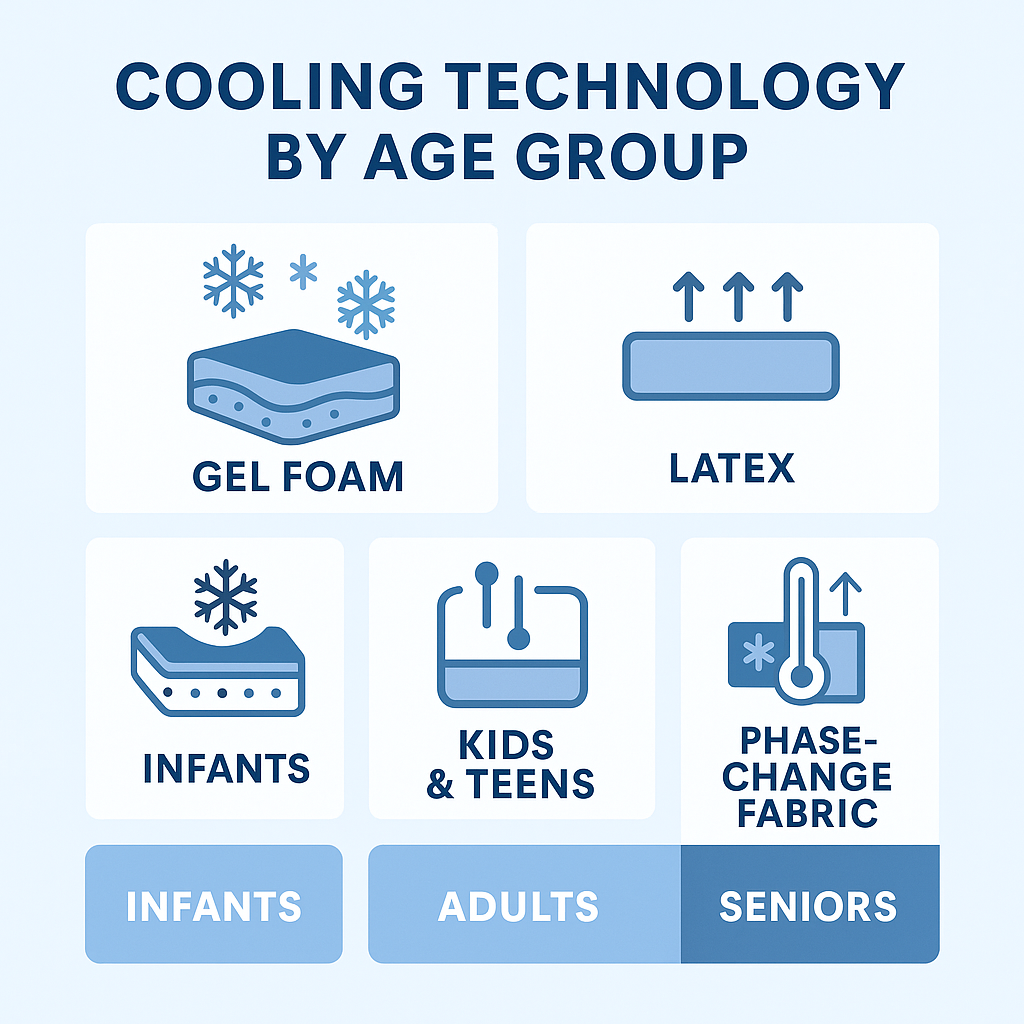
- Cooling technology is particularly important because hormonal shifts and increased metabolism cause teens to sleep hotter than adults do.
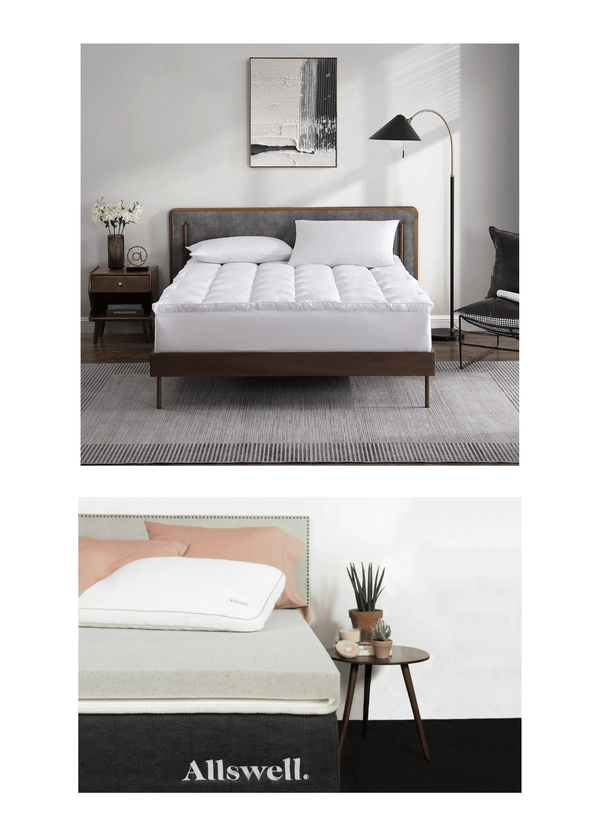
For those seeking an affordable way to adjust the feel or firmness of an existing mattress, adding a memory foam topper can offer extra contouring and comfort. However, it may not fully replace the benefits of a new mattress.
Older teens, college students, and adults wanting better cooling and pressure relief will find this Purple mattress topper comparison useful for boosting comfort without replacing a full mattress.
Larger mattress sizes, such as full or queen, are highly beneficial during the teen years. Teens often grow rapidly in height and need more space to sleep comfortably.
It's also important to choose a mattress that supports various sleeping positions, as teens may change their sleeping positions as they grow. Motion isolation also helps reduce sleep disruptions for teens who frequently toss and turn.
Ideal mattress features for teens:
- Firmness: Medium or medium-firm for growth support
- Cooling: Gel-infused foams, latex, or hybrids
- Size: Full or queen for height and movement
- Pressure relief: Cushioned layers for shoulders and hips
- Durability: High-density foams for long-term use
3.5 Young Adults (20–35 Years): The “Transition Sleep Years”
Young adulthood involves constant change—career shifts, relationship transitions, moving to new homes, or living with partners. The right mattress must adapt to different lifestyles and sleep preferences.
Couples need motion isolation to prevent disturbances, while individuals may prioritize affordability without sacrificing support. Medium-firm mattresses work well for most young adults because they balance contouring and alignment for various sleep positions.
Families comparing eco-friendly beds may want to explore how the Prana mattress performs in firmness and long-term comfort as sleepers transition from young adulthood into later life stages.
Budget is a major factor during this period, but cheaper mattresses often break down quickly. Hybrid mattresses offer the best value because they provide strong coil support, cooling, and comfort without the excessive cost of luxury materials. For those seeking a more affordable and flexible solution, a mattress topper can be a cost-effective way to adjust firmness or comfort without buying a new mattress.
Sleep position–specific firmness becomes more relevant, especially for side sleepers who may benefit from additional cushioning in the hips and shoulders.
Adults seeking minimal-motion, high-comfort options may appreciate this Thuma mattress review, which explains support, motion isolation, and suitability for couples.
Best mattress qualities for young adults:
- Couple-friendly: Motion isolation + edge support
- Balance: Affordable yet durable hybrid designs
- Firmness: Medium or medium-firm
- Cooling: Good airflow for warmer sleepers
- Adaptability: Works well for varied sleep positions
3.6 Adults (35–55 Years): Work Stress, Pain & Recovery
By mid-adulthood, many people experience back pain, neck tension, or shoulder discomfort caused by work posture, long hours, or lifestyle stress.
- A mattress with zoned support becomes especially valuable because it reinforces the lumbar region while providing softer cushioning elsewhere.
- Latex and hybrid mattresses are often ideal for this age group due to their balance of responsiveness, airflow, and pressure relief.
- A latex mattress, in particular, offers excellent support, durability, and pressure relief.
Temperature regulation also becomes more important as metabolism changes. Cooling foam, latex, or breathable coils help maintain comfortable sleep throughout the night.
Adults between 35 and 55 benefit from materials that provide deeper pressure relief to support recovery and reduce strain on joints and muscles.
Adults or seniors needing stronger pressure relief may find insights in this Loom & Leaf mattress review.
Recommended features for adults:
- Zoned support: Reinforced lumbar support
- Material choice: Latex or hybrid for balanced feel
- Pressure relief: Cushioned layers for stress-related tension
- Cooling: Airflow channels or gel foams
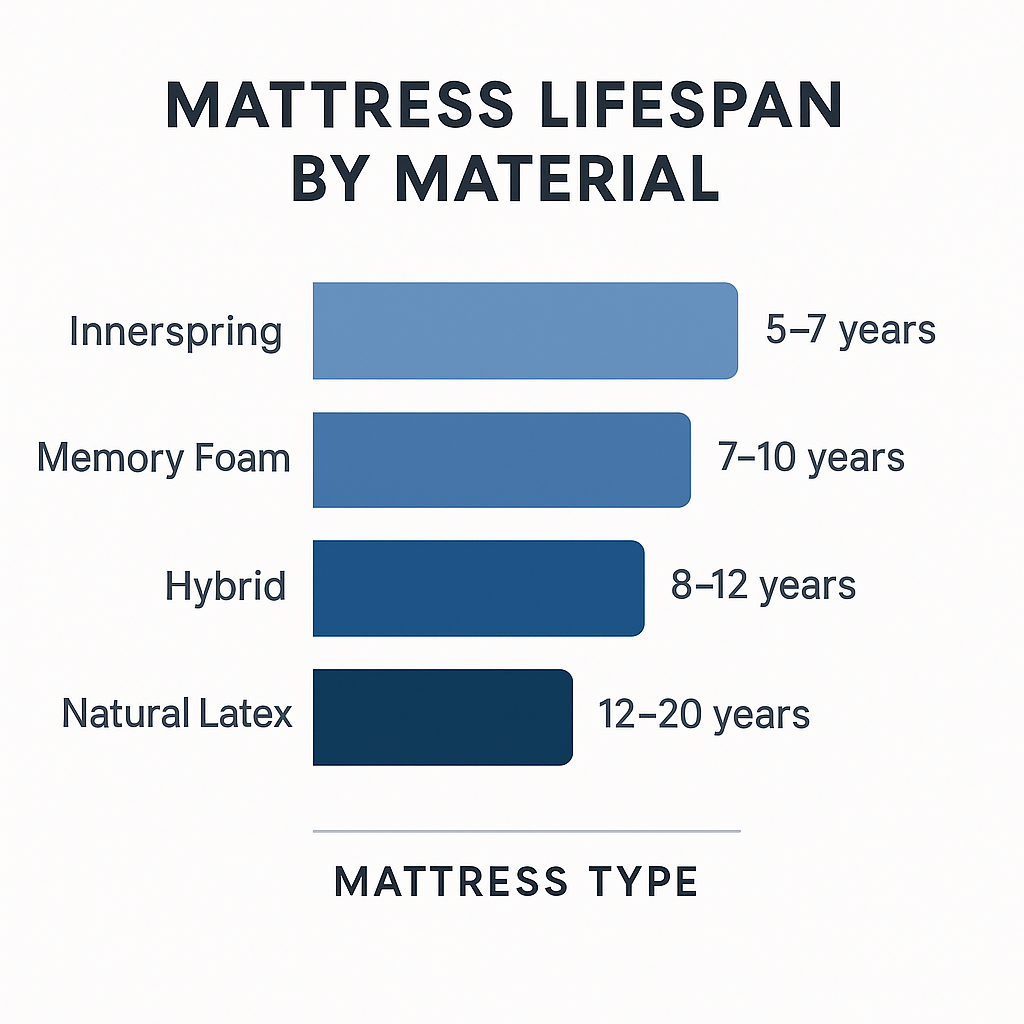
- Longevity: High-quality materials for 8–10 years of use
Couples and adults with changing comfort needs may consider iSense adjustable firmness technology for fully personalized support across all sleep positions.
3.7 Seniors (55+ Years): Pain Relief & Mobility Support
Seniors have unique sleep needs shaped by arthritis, joint pain, reduced muscle mass, and mobility challenges.
A mattress with medium-soft to medium-firm comfort layers helps protect sensitive pressure points without causing the body to sink too deeply. Strong underlying support is still necessary, but comfort takes priority as the body becomes more sensitive.
Edge support is especially important for seniors because it helps with stability when getting in and out of bed.
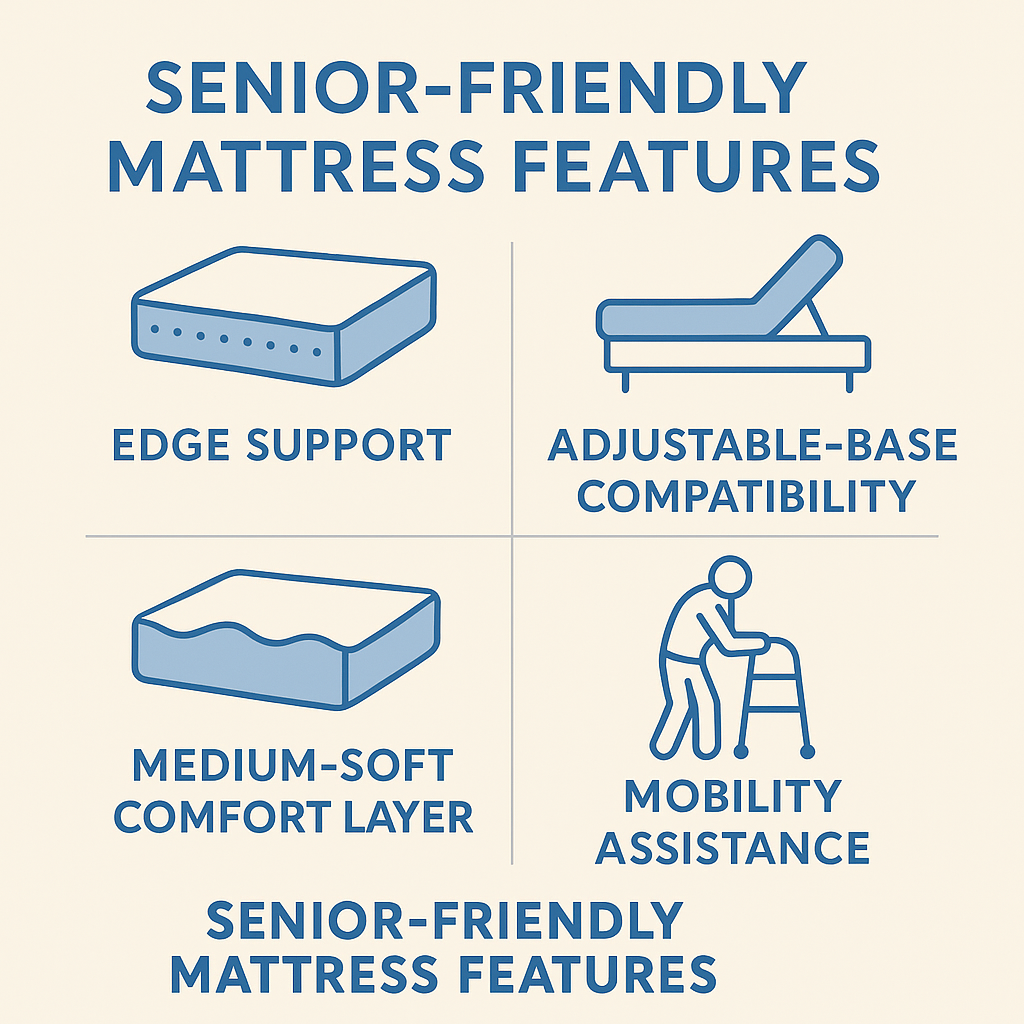
Many older adults benefit from adjustable beds that elevate the head or legs to reduce back pain, improve circulation, or ease breathing. Choosing an adjustable mattress can further help seniors with mobility issues or arthritis by providing flexible support and maintaining proper spinal alignment, thereby relieving pain. Mattress height also matters—lower beds can make standing more difficult, while overly tall beds increase fall risk.
Couples and adults with changing comfort needs may consider iSense adjustable firmness technology for fully personalized support across all sleep positions.
Senior-friendly mattress priorities:
- Pain relief: Soft, pressure-relieving comfort layers
- Support: Strong base to prevent sagging
- Mobility: Reinforced edges for easier standing
- Compatibility: Works with adjustable frames
- Height: Not too low or too high for safe entry
Selecting the right mattress features can improve sleep quality for older adults by enhancing comfort, support, and overall sleep health.
4. Special Populations (Key SEO Section)
Certain groups have unique sleep needs that don’t fit neatly into standard age categories. Pregnancy, chronic pain, body weight, and allergies significantly influence mattress performance. How a mattress feels can be especially important for people with unique sleep needs, as comfort is highly subjective and varies from person to person.
Tailoring your mattress choice to these specialized needs ensures better sleep quality, improved comfort, and long-term health benefits. This section provides targeted guidance for populations who require a more customized approach to mattress selection.
Allergy-sensitive sleepers across all ages may benefit from learning how wool mattresses improve airflow, comfort, and skin friendliness.
4.1 Pregnant Sleepers
Pregnancy dramatically changes how the body distributes weight and pressure, especially during the second and third trimesters. Increased abdominal size alters spinal alignment and makes certain sleep positions uncomfortable.
A mattress that balances moderate firmness with responsive cushioning can improve sleep and reduce nighttime discomfort.
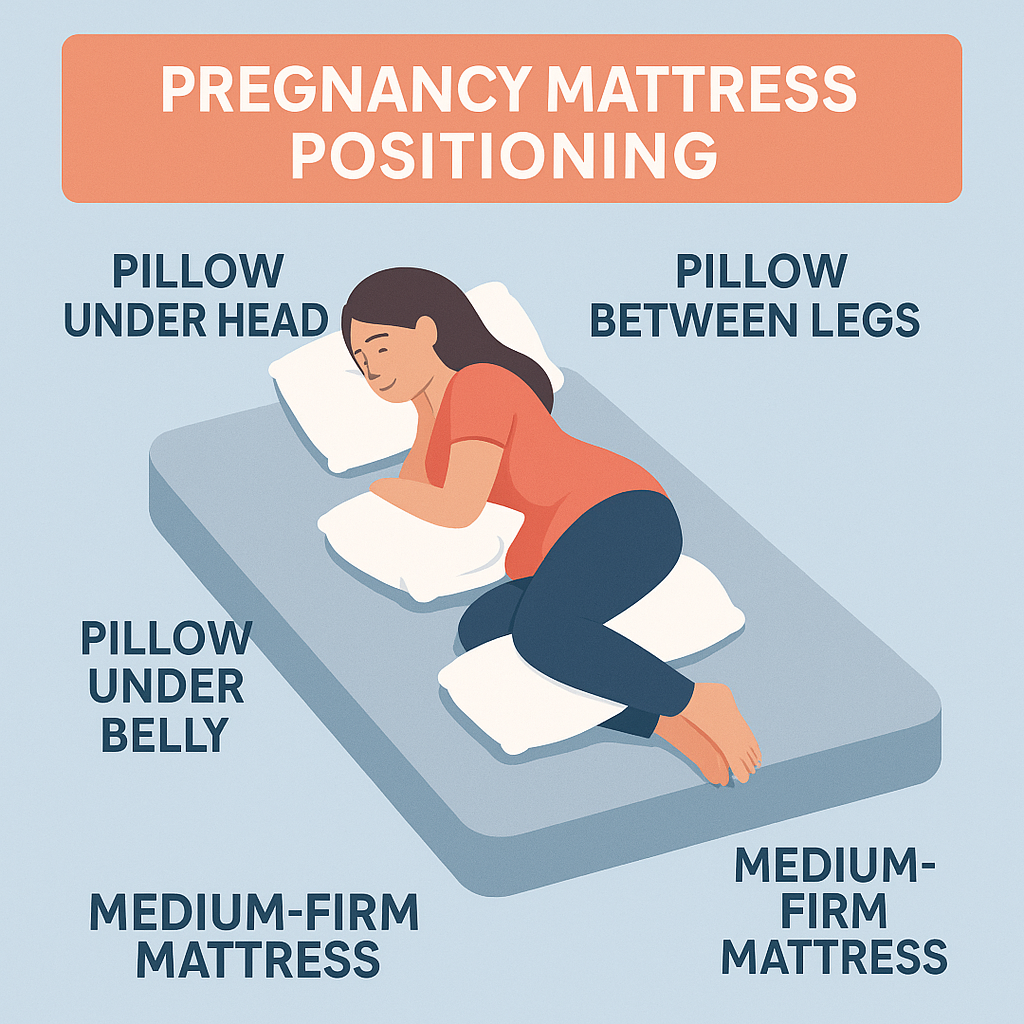
- Side sleeping becomes the dominant position during pregnancy, so contouring around the hips and shoulders is essential.
- A mattress that is too soft may cause misalignment, while an overly firm surface can create pressure points.
Body pillow integration makes a significant difference for pregnant sleepers. A supportive mattress paired with a full-body, wedge, or U-shaped pillow helps maintain spinal neutrality and reduces pressure on the pelvis and lower back. Cooling materials are also beneficial, as pregnancy can increase body temperature and discomfort at night.

Key needs for pregnant sleepers:
- Ideal firmness: Medium to medium-soft for contouring without sinking
- Support additions: Works well with body pillows for positional stability
- Temperature regulation: Cooling foams or breathable hybrids
- Mobility: Responsive surface for easier repositioning
4.2 People With Chronic Pain
Chronic pain requires a mattress that minimizes strain while promoting restorative rest. Back pain, hip and shoulder discomfort, and conditions like fibromyalgia all demand precise pressure relief and healthy spinal alignment.
People with lower back pain tend to benefit from medium-firm mattresses that provide a stable surface with enough cushion to reduce tension. Those with hip or shoulder pain may need softer comfort layers that contour deeply to relieve targeted pressure points.
Fibromyalgia amplifies sensitivity to touch and pressure. Adaptive memory foam, natural latex, and zoned-support systems can help reduce pain intensity by evenly distributing body weight and minimizing morning soreness.
Best mattress qualities for chronic pain:
- Back pain: Medium-firm with reinforced lumbar support
- Hip/shoulder pain: Softer comfort layers for deeper contouring
- Fibromyalgia: Pressure-relieving foam or latex with minimal motion transfer
- Overall: Zoned support to maintain spinal alignment
4.3 Plus-Size Sleepers
Plus-size sleepers need enhanced support, durability, and temperature regulation to maintain long-term comfort. Heavier body weight compresses mattress materials more deeply, so firmer, more supportive cores are necessary to prevent sagging.
Hybrid mattresses with strong steel coils and high-density comfort layers are particularly effective because they provide stability without sacrificing comfort. Reinforced edge support also enhances mobility.
Cooling is another priority because denser body weight can increase heat retention. Breathable coil systems, latex, and gel-infused foam layers help dissipate warmth more effectively.
Essential features for plus-size sleepers:
- Strong coil support: Prevents sagging and improves durability
- Edge reinforcement: Enhances mobility and surface stability
- Cooling design: Promotes airflow and reduces heat buildup
- Comfort layers: High-density foams or latex for proper contouring
4.4 Allergy-Sensitive Sleepers
Allergy-sensitive sleepers must prioritize hypoallergenic materials and cleaner sleep environments. Dust mite resistance, chemical-free foams, and breathable fabrics are essential for minimizing irritation.
Natural latex is particularly beneficial for allergy sufferers because it resists dust mites and mold, while certified memory foam options can provide similarly safe environments. Materials with excessive chemical odor or off-gassing should be avoided.
Certifications help ensure that a mattress is free from harmful chemicals and allergens. Certifications such as CertiPUR-US, OEKO-TEX Standard 100, and Greenguard Gold verify low emissions and safe material composition. Breathable covers and washable protectors add another layer of protection for people with allergies.
Best choices for allergy-sensitive sleepers:
- Hypoallergenic foams: CertiPUR-US certified memory foam or latex
- Recommended certifications: OEKO-TEX Standard 100, Greenguard Gold
- Protection: Washable covers or protectors to reduce exposure
- High-breathability: Prevents moisture buildup that triggers allergies
5. Material Breakdown: Best Materials by Age Group
Mattress materials play a major role in determining comfort, support, durability, and temperature regulation. However, not all materials work well for every age. Some mattress features marketed as 'sleep technology'—such as cooling gels or advanced coil systems—may not deliver real benefits and should be evaluated critically.
Babies need breathable, safe firmness; kids require durable surfaces; teens need cooling; adults need balanced support; and seniors benefit from pressure relief and ease of movement.
This section breaks down how each material works—and which age group it best serves—so choosing the right fit becomes simple and science-backed.
If you're exploring hybrid or innerspring options, this Simmons mattress guide helps clarify support levels for kids, adults, and seniors.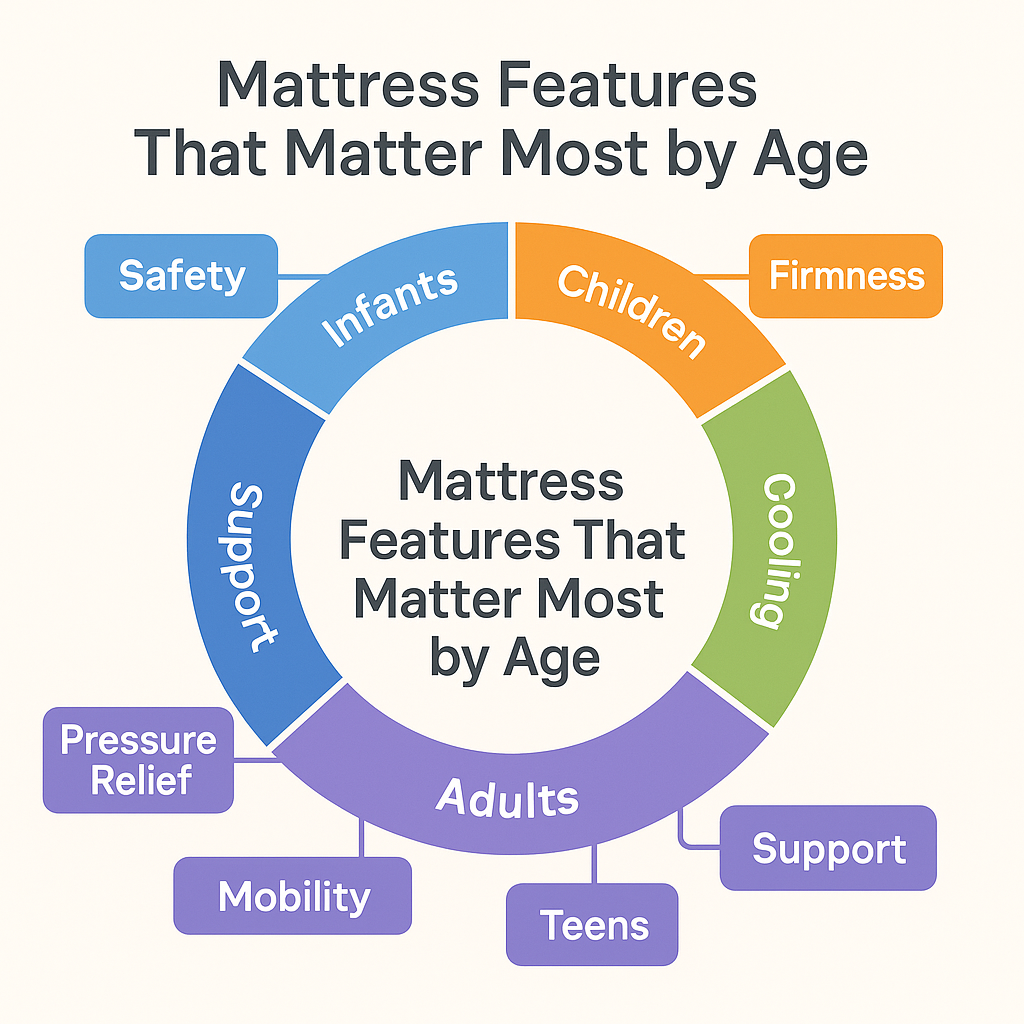
Memory Foam
Memory foam is known for contouring closely to the body, relieving pressure points, and reducing motion transfer.
These qualities make it a strong match for teens, adults, and seniors who need deeper cushioning around the shoulders, hips, or lower back.
- Memory foam adapts well to sleep positions and provides comfort for extended periods of rest. However, it is not recommended for infants or toddlers due to its soft, sinking surfaces, which can compromise safety.
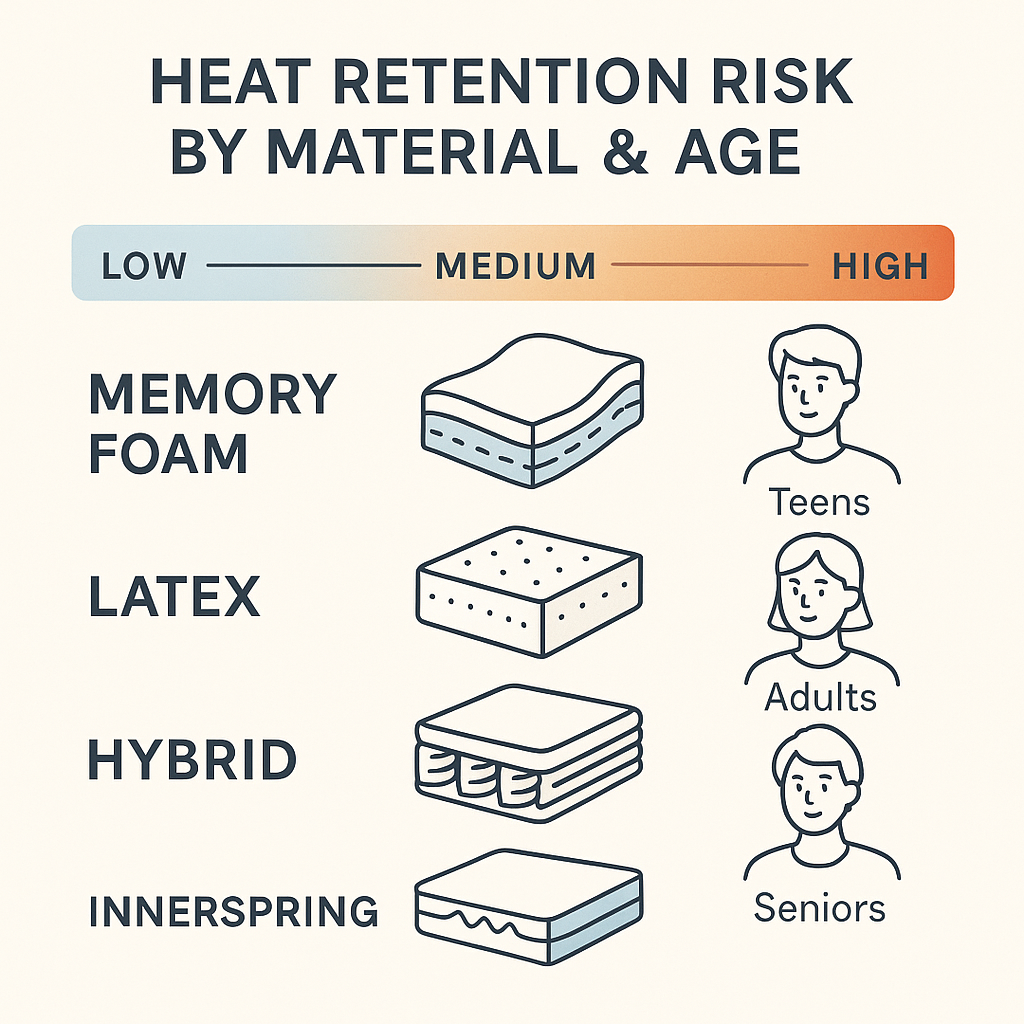
- Because foam can retain heat, cooling-infused options—like gel, copper, or open-cell designs—are particularly valuable for hot sleepers.
- Seniors benefit from memory foam’s ability to cushion sensitive joints, while adults appreciate its uniform support for relieving work-related tension.
Best age groups for memory foam:
- Teens: Pressure relief for growth spurts
- Adults: Stress-related pain management
- Seniors: Deep contouring for joint comfort
Latex
Latex offers a responsive, buoyant feel with natural cooling properties. It is ideal for sleepers who want contouring but don’t enjoy the “sink-in” sensation of memory foam. Natural latex is hypoallergenic and durable, making it an excellent choice for children and adults seeking a cleaner sleep environment.
Because latex is naturally breathable and supportive, it works well for both hot sleepers and people with mild joint discomfort. Seniors may appreciate its ease of movement, as latex makes repositioning easier than memory foam.
Best age groups for latex:
- Kids: Durable, hypoallergenic, supportive
- Adults: Balanced comfort and responsiveness
- Seniors: Good mobility with gentle cushioning
Hybrid
Hybrid mattresses combine coils for support with foam or latex comfort layers. This blend makes hybrids the most versatile mattresses across age groups.
Children benefit from supportive coils, teens enjoy improved airflow, adults receive targeted lumbar support, and seniors appreciate both the stability and cushioning. Hybrids are especially useful for couples and heavier sleepers.
Best age groups for hybrids:
- Kids & teens: Breathability and structured support
- Adults: Zoned support and motion isolation
- Seniors: Reinforced edges and balanced comfort
Innerspring
Innerspring mattresses offer strong support and excellent airflow. They work particularly well for toddlers, children, and some seniors who prefer a firmer surface. Their stability makes them good transitional beds for bunk setups or for sleepers needing more lift than contouring.
Best age groups for innerspring:
- Toddlers: Firm safety and durability
- Kids: Affordable support during growth
- Seniors: Higher surface lift for mobility
Organic / Hypoallergenic Materials
Organic cotton, wool, and natural latex create safe, breathable sleep environments ideal for babies, kids, and allergy-sensitive sleepers. These materials reduce exposure to chemicals and odors while resisting dust mites and mold.
Best groups for organic materials:
- Infants: Firm, breathable crib mattresses
- Kids: Cleaner, low-toxin sleep surfaces
- Allergy-prone sleepers: Hypoallergenic, chemical-free options
6. Mattress Size Guidelines by Age & Space
Choosing the right mattress size is just as important as selecting the proper firmness or material. The ideal size changes as a person grows, gains independence, shares a bed, or begins experiencing mobility changes.
A child who sleeps comfortably in a twin bed may quickly outgrow it during a growth spurt, while adults and couples need enough surface area to maintain a healthy sleep posture.
- Room size, layout, and bed height all play major roles in determining which mattress size fits best.
- Selecting the correct size early helps prevent premature replacements and supports long-term comfort.
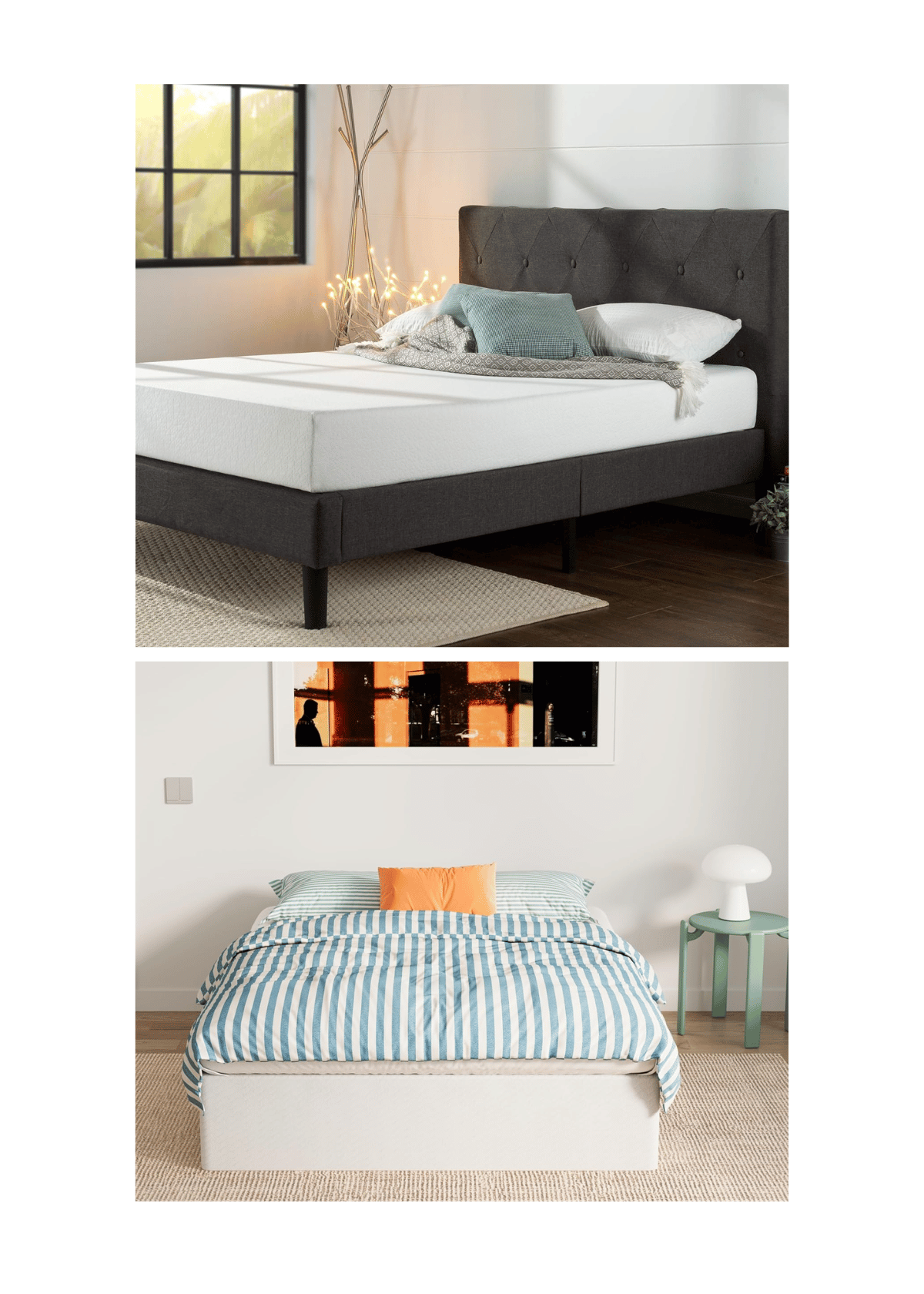
- It’s also important to choose a compatible bed frame or foundation to ensure optimal support, durability, and to maximize the benefits and lifespan of your mattress.
Teens, couples, and adults needing extra space can reference California queen mattress sizing and material guidance.
The most common progression follows a simple pathway: crib to twin, twin to full, and full or queen for teens and adults. Babies sleep on crib-sized mattresses because they need a secure, snug-fitting sleep surface.
Once a child develops enough motor control, a twin or twin XL mattress provides more length and independence while saving space in smaller bedrooms.
During adolescence, a full or queen mattress becomes useful to accommodate increased height and movement. Young adults, couples, and long-term sleepers often prefer queen or king sizes for comfort and to stretch out.

General age-to-size recommendations:
- Crib (0–2 years): Safe, snug-fitting sleep surface
- Twin/Twin XL (3–12 years): Ideal for kids and early teens
- Full (12–19 years): Offers more width for growing bodies.
- Queen (20+ years): Best balance of space for singles or couples
- King: Maximum comfort for couples or spacious rooms
Couples should choose at least a queen to ensure personal movement doesn’t disturb their partner. Room layout matters as well—there should be space to walk around the bed and open drawers or closet doors without obstruction.
Mattress height also influences safety and comfort. Lower beds help toddlers and seniors get in and out more safely, while thicker or taller mattresses may be chosen for aesthetics or to accommodate growth. However, safety and accessibility should be prioritized for children and seniors.
Height and space considerations:
- Toddlers & seniors: Lower profile for easy access
- Adults: Standard height for comfort and aesthetics
- Small rooms: Full or queen with mindful layout planning
7. Budget, Trial Periods, and Warranty Considerations by Age Group
Budgeting for a mattress varies widely across life stages because each age group uses its bed differently and has different long-term needs.
Children outgrow their mattresses faster; teens require durability through growth; adults need higher-quality materials for posture and comfort; and seniors must prioritize pressure relief and mobility.
- Understanding when to spend more—and when budget options are perfectly acceptable—helps protect both your finances and sleep health. Trial periods and warranties also play a major role in reducing risk and ensuring long-term satisfaction.
- For children, parents often prioritize affordability because kids grow quickly. A well-made hybrid or foam mattress with moderate durability is usually sufficient.
- Teens need stronger materials because they experience rapid changes in height, weight, and sleep patterns; investing slightly more ensures their mattress lasts through key developmental years.
Adults benefit from higher-quality builds, especially if dealing with pain or stress-related tension. Seniors often need the best combination of pressure relief, edge support, and mobility, which justifies spending more on comfort layers and adjustable-base compatibility.
Budget-focused parents and teens benefit from learning how Milliard mattresses balance affordability with supportive foam design, making them reliable during rapid growth years.
What to prioritize by age group:
- Kids: Affordability + basic durability (they will outgrow it)
- Teens: Strong support + cooling (growth and heat regulation)
- Adults: Pressure relief + longevity (long-term value)
- Seniors: Comfort layers + mobility support (health and ease of use)
Trial periods help eliminate guesswork by allowing sleepers to test a mattress risk-free. The best brands offer 90–365-night trials. This is especially useful for adults and seniors who may need several weeks to evaluate pressure relief or alignment.
Warranties vary from limited warranties to full replacement coverage. They protect against manufacturing defects but rarely cover normal wear or sagging below a certain depth. High-quality companies stand behind their products with longer terms.
Warranty essentials:
- Look for 10–25 years, depending on quality
- Understand sagging coverage (often 0.75–1.5 inches)
- Confirm what's excluded (stains, improper foundations)
Choosing the right balance of budget, trial protection, and warranty ensures long-term value for every age group.
8. How to Test a Mattress Properly (Age-Specific Tips)
Testing a mattress the right way is essential for finding the perfect mattress that truly supports long-term comfort, spinal alignment, and overall well-being. Because bodies change with age, each life stage benefits from a slightly different testing approach.
- Children need basic stability checks; teens need cooling and pressure-relief evaluation; adults must examine alignment and motion isolation; and seniors should assess mobility and edge strength.
- Whether browsing online options or visiting mattress stores in person, a proper test helps ensure the mattress supports restorative sleep rather than contributing to discomfort.
Couples and adults with changing comfort needs may consider iSense adjustable firmness technology for fully personalized support across all sleep positions.
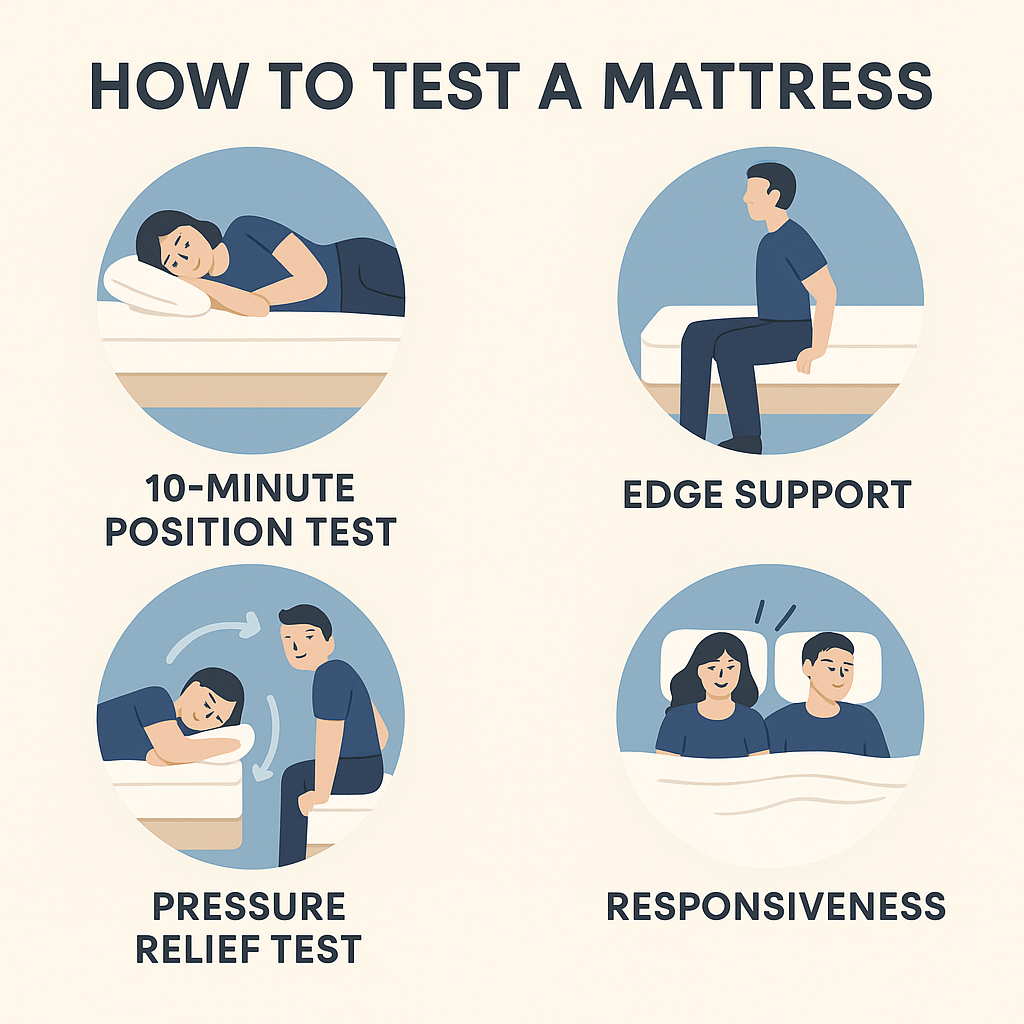
- Begin with the 10-Minute Position Test, a simple method that simulates real sleep conditions. Lie in your usual position—side, back, or stomach—and let your muscles completely relax.
- This will reveal whether the mattress supports your spine naturally or forces your body to tense up. This test is important for anyone comparing memory foam, natural latex, or hybrid mattresses with innerspring coils.
- Next, complete a pressure-release test by gently rolling from one side to the other. This helps you determine how well the mattress contours around sensitive areas such as the shoulders, hips, and lower back.
- Teens and adults often benefit most from this step due to growth spurts, daily activity, and work-related tension. Seniors and pregnant sleepers should pay extra attention to responsiveness.
Couples should test together to confirm that movement on one side of the bed does not disturb the other. Seniors or those with mobility limitations should also practice getting in and out of bed to ensure the mattress height and edge design support safe movement.
Essential mattress testing steps:
- 10-Minute Position Test: Check alignment in your natural sleeping position.
- Pressure-relief test: Roll and assess whether shoulders and hips feel cushioned.
- Edge-support test: Sit on the edges—especially important for seniors.
- Motion-isolation test: Have a partner move to check disturbance control.
- Responsiveness test: Confirm how easily you can reposition—crucial for pregnant sleepers and seniors.
9. Mistakes to Avoid When Choosing a Mattress by Age
Choosing the wrong mattress often results from ignoring how age affects comfort and spinal needs. A mattress that worked years ago may no longer provide the support required for a good night’s sleep as the body experiences changes in muscle elasticity, joint comfort, and sleep patterns. Poor alignment can gradually lead to upper-back or lower-back tension, making daily comfort harder to maintain.
Choosing mattresses for different age groups can be confusing, and reviewing mattress industry regulations and safety standards helps readers understand ideal firmness, materials, and certifications from infancy to senior years.
- One of the biggest mistakes is selecting a mattress that is too soft for babies. Infants must sleep on firm, stable surfaces to prevent sinking and ensure safe breathing.
- As children grow into teens, their firmness needs shift, and many require more pressure relief—especially during growth spurts.
- Adults who remain on overly firm surfaces often experience discomfort in the hips, shoulders, and lower back.
- Seniors are more sensitive to pressure points, making cushioning even more important. Without proper contouring—whether from memory foam, natural latex, or modern hybrids—they may wake frequently or struggle to get comfortable.
- Teens also experience temperature spikes due to hormonal changes, so choosing a mattress with cooling properties is essential.
Lastly, mattress height matters. Beds that are too tall can make it difficult for seniors and young children to get in or out safely.
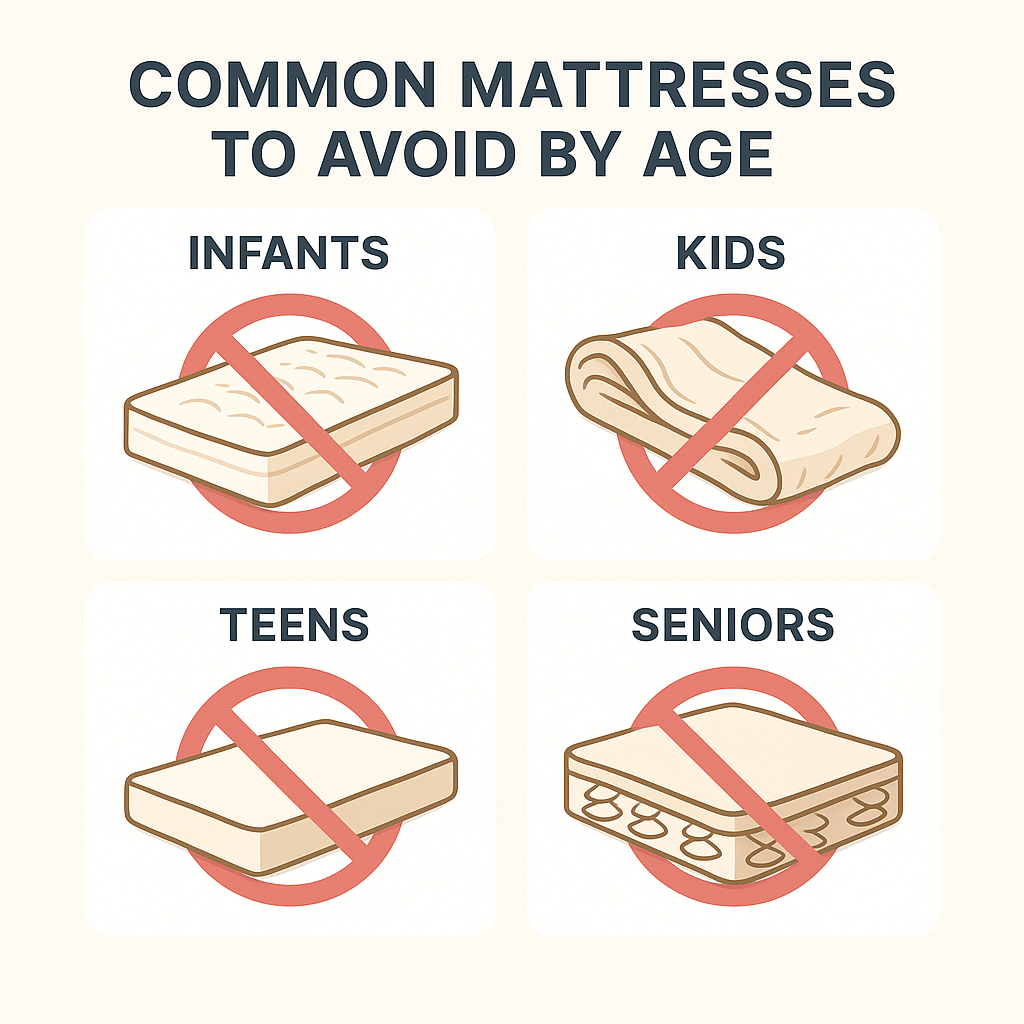
Mistakes to avoid by age:
- Buying too soft for babies
- Staying too firm as you age
- Ignoring cooling needs for teens
- Underestimating pressure relief for seniors
- Choosing the wrong mattress height
10. Tips for Mattress Shopping
When it’s time to shop for a new mattress, a few smart strategies can help you find the perfect fit for your sleep needs and lifestyle. Here’s how to make the process easier and more effective:
- Match Mattress Firmness to Your Sleep Position and Body Weight: Side sleepers often benefit from a softer mattress that cushions the shoulders and hips. In comparison,e back and stomach sleepers typically need a firmer mattress to maintain proper spinal alignment. Heavier individuals may require firmer support, while lighter sleepers might prefer a softer feel.
- Consider Your Sleep Preferences: Do you tend to sleep hot or cold? If you sleep hot, look for breathable materials or cooling features. If you experience joint pain or pressure points, prioritize mattresses with extra support and pressure relief, such as memory foam or latex.
- Choose the Right Mattress Type: Memory foam mattresses offer exceptional pressure relief and contouring, while innerspring mattresses provide strong support and good airflow. Latex mattresses are naturally hypoallergenic and responsive, and hybrid mattresses combine the best of both worlds. Consider which mattress type best aligns with your comfort and support needs.
- Look for Key Features: Edge support is important for maximizing the usable sleep surface and making it easier to get in and out of bed. Hypoallergenic materials can help reduce allergies and promote a cleaner sleep environment. If you share your bed, consider motion isolation to minimize disturbances.
- Test Before You Buy: Lie down in your usual sleep position and pay attention to how your body feels. Check for proper spinal alignment, comfort, and support. Don’t hesitate to spend several minutes on the mattress to get a true sense of how it feels.
- Ask About Policies and Certifications: Inquire about return policies, trial periods, and warranties to ensure you have time to adjust to your new mattress. Look for certifications like CertiPUR-US or OEKO-TEX to guarantee you’re getting a high-quality, safe product.
- Consider Shopping Online: Buying a mattress online can offer more options and competitive pricing. Read customer reviews, check the return policy, and make sure the company offers a risk-free trial so you can test the mattress at home.
✅ How to Choose the Right Mattress Firmness for Any Age
5 Steps
- Identify your age group (infant, child, teen, adult, senior).
- Match firmness level using expert guidelines (e.g., firm for infants, medium for teens, medium-soft for seniors).
- Evaluate your sleep position to fine-tune firmness further.
- Test the mattress using the 10-minute lie-down test at a store or at home.
- Check for pressure relief or pain points to confirm the firmness is correct.
✅ How to Test a Mattress Properly Before Buying
5 Steps
- Lie on the mattress for 10 minutes in your normal sleep position.
- Perform a pressure relief test by rolling from one side to the other.
- Check edge support by sitting and lightly bouncing near the edges.
- Evaluate motion isolation if you share a bed with a partner.
- Assess ease of movement to ensure it suits your age and mobility needs.
✅ How to Select the Best Mattress Size for Your Room and Age
5 Steps
- Determine the sleeper’s age and recommended size (crib, twin, full, queen).
- Measure the bedroom space ensuring 30–36 inches of walkway around the bed.
- Compare mattress thickness based on accessibility needs (kids/seniors = lower profiles).
- Evaluate future needs such as teen growth or partner compatibility.
- Choose a frame and layout to confirm the mattress fits comfortably in the room.
Conclusion: Expert Takeaway
Choosing the right mattress by age ensures lifelong sleep quality, reduced pain, and better overall health.
Whether you’re shopping for a baby, a teen, yourself, or an aging parent, understanding the body’s needs at different life stages makes the process easier and more accurate.
When in doubt, remember: pick firmness appropriate for age, prioritize support, consider temperature regulation, and always test the mattress thoroughly before committing.
FAQS
What mattress firmness is best by age?
Firmness varies by age: infants need very firm surfaces for safety, children do best with medium support, teens benefit from medium–medium-firm, adults often prefer medium-firm for spine alignment, and seniors usually need medium-soft to medium-firm for joint comfort and pressure relief.
Do seniors need softer or firmer mattresses?
Seniors typically need a medium-soft to medium-firm mattress. Softer top layers cushion sensitive joints, while supportive cores prevent sagging and ease mobility. This balance reduces pressure points, supports arthritis, and helps older adults get in and out of bed more comfortably without losing essential spine alignment.
When should you replace a child’s mattress?
Most children’s mattresses should be replaced every 5–8 years, or sooner if they sag, cause discomfort, or no longer support growth. As kids get taller and heavier, upgrading helps ensure proper spinal alignment, hygiene, and comfort during key developmental years.
Should teenagers switch to a bigger size?
Yes. Teens often outgrow twin mattresses quickly due to rapid height and shoulder-width changes. Upgrading to a full or queen-size improves sleep quality, reduces restlessness, and accommodates growth, sports recovery, and changing sleep positions throughout adolescence.
Is latex or memory foam better for aging adults?
Both materials help seniors, but latex offers easier movement, stronger support, and natural cooling. Memory foam provides deeper pressure relief for arthritis or joint pain. Aging adults often prefer latex for mobility and memory foam for cushioning—choosing depends on sensitivity, mobility, and comfort preference.
Which material mattress is best for all ages?
Hybrid mattresses are best across all ages because they balance support, breathability, and pressure relief. Coils maintain spinal alignment for growing kids and adults, while foam layers add comfort for teens and seniors. This structure adapts well to changing body needs throughout life.